domingo, 7 de fevereiro de 2010

Avatar de Cameron e Tolkien-Qual é a relação?


Influência direta? As aparências podem enganar... "I see you" Cameron ;-)

Dias atrás postaram isso em dois fóruns da Internet

The_Pussylover :Não sei se aqui é o lugar certo para eu postar, mas qualquer coisa por favor me avisem que eu posto em outro lugar ok.


Galera foi só eu que percebi no filme Avatar, que tem muitas influências do Tolkien ? ( Principalmente O Silmarillion )
Quando assisti, ontem, fui assimilando muitas coisas
Na'Vi (ou Omanticaya) = Elfos - São Povos da Floresta, de grande sabedoria e em total harmonia com a natureza, são muito agéis e fortes. ( o que faltaria seria imortalidade )

Tem uma parte que a Neytiri fala das 5 canções, algo relacionado com Deus - No Silmarillion tudo começa com uma canção.

Há uma semelhança com o Palácio de Galadriel com a Grande Árvore do filme Avatar.

Essa somente quem leu vai saber

Beren e Lúthien = Jake Sully com Neytiri
Uma história muito assemelhada, Lúthien filha de um Rei ( Thingol ) fica junto com um Homem ( Beren ) unindo duas raças, o que acontece em Avatar também.
Não vou me aprofundar nisso pois senão fica mais complicado hehehe.

O Que acham ?


Eu até entendo como é que tal raciocínio pode ser feito mas, estando eu na posição de quem, já muitas vezes, foi criticado por enxergar referências tolkienianas onde as pessoas não as viam, estando em várias vezes delas correto como o tempo veio a mostrar, nesse caso, em particular, vou sair em defesa de Cameron com toda a veemência que ele merece. Isso em homenagem aos Oscars que(espero)sejam entregues para a película daqui a um mês.

Não acho, de modo algum, que Tolkien figure entre as principais fontes de Avatar mesmo que inconfessadamente. Tolkien e Cameron têm, sim, diversas fontes comuns no caldo que deu origem a ambas as obras.Como não podia deixar de ser dada a natureza e amplidão de seus "world buildings" monumentais.

Olhe só como o próprio Cameron está bem consciente do seu material fonte: as comparações abaixo detalhadas vão mostrar a veracidade dos comentários do Cameron.

Essa excelente página sumariza os
débitos de Avatar com Edgar Rice Burroughs.


E para quem quiser conferir os débitos de Tolkien pelo mesmo Edgar Rice Burroughs pode conferir aí nesse post . Não é pouca coisa e quanto mais leio e conheço mais visivel a influência se torna.


It’s fine for a guy to be attracted to women, but I need the male audience to respond to this guy and say , “Yeah, I see why people would follow him.” So ultimately he becomes this messianic leader who leads them into battle… in the old school Edgar Rice Burroughs, Rudyard Kipling, H. Rider Haggard way. Where a guy kinda wanders into a situation in another culture, then rises through the ranks – or whatever – a Lawrence of Arabia kinda of story.

Where did the actual story of it come from? It’s a very sort of old school, frontier sort of story; it’s almost Dances With Wolves.
Yeah, that's good, I like that. There's a lot of very recognisable archetypes in the story: the stories of which Dances With Wolves is one, the story of the American frontier and the conflict between technical, Western civilisation and the very close to nature indigenous populations, the native Americans, and that didn't go too well for them, you know. And of course that story is replicated throughout history in South America, Africa, India. It has all these various ways in which it plays out but it generally doesn’t bode too well for the indigenous population.


You can't have your characters running around through the rainforest with a machine gun these days, it's just not PC.

I think it’s got its roots in good old-fashioned, adolescent adventure storytelling. The sort of, Rudyard Kipling Man Who Would Be King, Lawrence of Arabia, John Carter of Mars . Anytime that you have somebody who's a representative of another culture, especially a mechanised or military culture, dropped into a completely different culture in an exotic land, and they have to find their place and themselves in the process. It's all pretty familiar stuff. I think from a science fiction standpoint it's got its roots in really classic science fiction of the 40's and 50's, not the kind of necessarily dystopian science fiction of the 60's and 70's. But that's OK, that was by design. You can't have your characters running around through the rainforest with a machine gun these days, it's just not PC. But you can do it on another planet. You can get away with things on Pandora that we couldn’t get away with here.


Não deixa de ser um fato a noção de que ele foi inspirado pela Trilogia de Peter Jackson no que tange ao uso de tecnologia. Ele já estava aguardando o desenvolvimento da computação gráfica usada para o Gollum já fazia mais de dez anos e sabia que tal técnica incrementada seria a chave para tornar Avatar uma realidade

When I see a movie that excites me visually, the feeling is extraordinary. I went to see `Lord of the Rings’ for entertainment, but you begin to think, is this something I can incorporate? That’s how this works and it goes in cycles. Peter Jackson inspired me with consummate filmmaking and the specificity of the CG that made me feel a doorway opening that enabled me to make `Avatar.’


Também é verdadeiro que ele tinha noção de que um exercício de elaboração subcriativa na proporção de Avatar é algo que invoca imediatamente a idéia de Tolkien e seus análogos como criadores de mundos;


. Mr. CAMERON: Yeah.

BLOCK: Now, was this...

Mr. CAMERON: That's how geeky this is, you know.
BLOCK: Yeah. Well, is that you as a geek? Were you coming up with those names?
Mr. CAMERON: Sometimes. I basically surrounded myself by geeks who fed off the same kind of sense of fun of creating a world and some - you know, with a certain level of reality in the way that a novelist like J.R.R. Tolkien would create the world, create the language of the world like Elvish, and I'd always wanted to do that. And it was fun. So, you know, we had an ethnomusicologist and a botanist and an astrophysicist and everybody all sitting around a table for - and it was like a three- or four-day session to come up with all of the Latin names.


Esse reconhecimento, entretanto, não faz com que Tolkien tenha sido especificamente uma fonte usada para esse filme. É mais o caso dele ser um exemplo a ser emulado em termos de desempenho e metodologia e não de se estar seguindo seus passos com fins parecidos para as mesmas destinações.

Então a maioria absoluta dos paralelos entre as obras se deve ao fato delas serem homólogas, terem sido calcadas em cima de fontes iguais: Rider Haggard, Mitologia Celta, Edgar Rice Burroughs, Flash Gordon, James Fenimore Cooper etc.

O fato dessa verdade não ser percebida de cara é um caso clássico de aplicação do que Joe Michael Straczynski ( autor de Babylon 5 , das histórias do Thor da Marvel atuais e do roteiro do filme A Troca) chamou de a predominância do padrão mítico mais familiar como parâmetro de comparação, gerandoo efeito "teste de Rorschach" ou a tão mencionada "aplicabilidade" defendida por Tolkien .

Anyway, it's what I've always said about this show...you see the paradigm with which you are most familiar.Sometimes that's great,and sometimes it's a curse.


É natural que a gente faça comparações com aquilo que mais se aproxima da nossa vivência cultural, de 10 anos para cá o Senhor dos Anéis tem sido o termo de comparação para muito mais gente, principalmente em nações onde esse tipo de literatura não era muito divulgada antes, mas isso não quer dizer que Tolkien inventou a roda, coisa que os fãs mais novinhos tendem a pensar em situações assim.

Vamos por partes:

Na'vi ou Omaticaya e os Elfos: a caracterização dos Na'vi deriva, de fato, da cultura indígena americana ( e vários dos elementos nos elfos arborícolas de Tolkien tb) pelo menos nos seus aspectos mais ostensivos, dados os empréstimos de Dança com Lobos e Pocahontas. Mas também é influenciada pelos mesmos tipos de mitos celtas ( e respectivas fontes históricas) que serviram de molde para Tolkien , inclusive os pictos ingleses com o uso extensivo do arco e flecha, a cultura xamanística e pinturas corporais ( vistos no filme do Arthur do Fuqua por exemplo e também nas histórias de Robert E. Howard de Bran Mak Morn, Conan e Kull) e, principalmente, detalhe muito importante ausente dos indios americanos e das adaptações literárias dos pictos: uma religião panteística matriarcal.

Esse último elemento deriva das pesquisas sobre antiga religião pré-indo-européia feitas por Robert Graves (A Deusa Branca 1948), cujas análises influenciaram a geração de Tolkien, já refletindo possíveis especulações de James Frazer. Mais recentemente, a arqueóloga Maria Gimbutas reforçou as conclusões de Graves e foi tremendamente influente na constituição do Neopaganismo de nossos dias e, portanto,na leitura esotérica ou pagã que se pode fazer da obra de Tolkien.


Cadeia evolucionaria, Jake Sully como o Toruk Makto


Flash Gordon, o rebelde espacial "quase" original

Legolas, o "caçador de Olifantes" da versao cinematografica do SdA


Flash Gordon no comando de outro exercito alado no filme dos anos oitenta.


Mas seres "aborígenes" costumam ser representados dessa forma clássica, principalmente por influência de James Fenimore Cooper, autor do Último dos Moicanos (1826), que foi de onde vieram diversos dos clichês que Tolkien adotou para os elfos "florestais". O uso do esquema de se vendar os indivíduos suspeitos para não se conhecer o caminho pela floresta ( artifício tb presente na caracterização do Robin Hood e seu bando da floresta nos livros de Walter Scott Ivanhoé de 1814, ele mesmo influência para Cooper) e, talvez, e provavelmente para Tolkien é um dos claros empréstimos de Tolkien. . A viagem de canoa para fora de Lothlórien também tem paralelos no livro.

Uma excelente pesquisa sobre as origens do modelo heróico, inclusive com as contribuições de Fenimore Cooper

Cooper's work has greatly influenced J.R.R. Tolkien, whose Elves have many elements of Cooper's portraits of noble Native Americans, while some passages -- like the journey down the river Anduin in The Two Towers -- read like passages from The Last of the Mohicans.

Esse comentário provavelmente reflete T.A.Shippey in The Road to Middle-Earth, página 299

In the same way Fenimore Cooper's hero Natty Bumppo prides himself on being 'a man whose blood is without a cross'; and Tolkien recorded an early devotion to Red Indians, bows and arrows and forests ('OF-S' in TL, p. 39). The journey of the Fellowship from Lorien to Tol Brandir, with its canoes and portages, often recalls The Last of the Mohicans, and as the travellers move from forest to prairie, like the American pioneers, Aragorn and Eomer for a moment preserve faint traces of 'the Deerslayer' and the Sioux, see p. 115 above. The complaint in one of the sillier reviews of The Lord of the Rings, that none of its characters (except Gimli) had 'an even faintly American temperament', is as imperceptive as irrelevant.

The 'American temperament' has roots in many places, but England isnot the least among them: caelum поп animam mutant qui trans marecurrunt.


Tolkien no ensaio dos Contos de Fadas

Eu tinha muito pouco desejo de procurar tesouro enterrado ou combater piratas,e A Ilha do Tesouro me deixou frio. Índios eram melhores: havia arcos e flechas (eu tinha e tenho um desejo completamente insatisfeito de atirar bem com um arco), e línguas estranhas, e vislumbres de um modo arcaico de vida, e, acima de tudo, florestas em tais estórias. Mas a terra de Merlin e Arthur era melhor que essas, e o melhor de todos era o Norte sem-nome de Sigurd dos Völsungs, e do príncipe de todos os dragões.


Na verdade, a ordem de influência aí é bem essa mesmo: pictos célticos e povo das fadas ( sidhe (shee na pronúncia), reparem que as montarias dos Omaticaya receberam o apelido terrestre de Banshees), base para os Drúadan de Tolkien também, Robin Hood e seu bando de Walter Scott (1814), a caracterização dos indios nos livros de Cooper (1826) ( em parte influenciadas por modelos scottianos e seus clichês e artifícios de
enredo), os povos "aborígenes" africanos dos livros de "lost worlds" do Rider Haggard ( iniciados com as Minas do Rei Salomão de 1885) e os alienígenas de Edgar Rice Burroughs ( começando a partir de 1912).

É só depois disso que Tolkien passa, cronologicamente, a ser uma influência vindo inclusive, depois dos Tree Men do Alex Raymond em Flash Gordon. eles eram os habitantes de Arboria ,o reino florestal explicado logo adiante.


Tree Men de Arboria
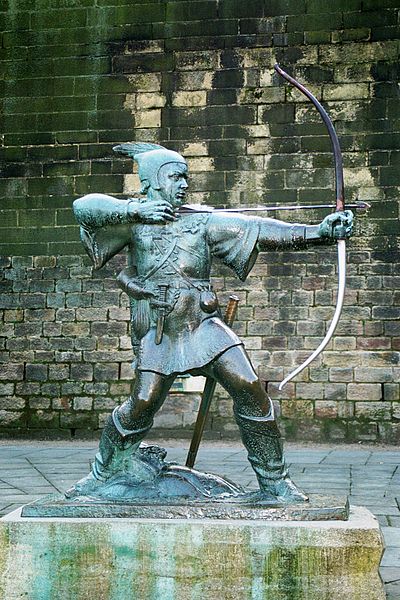


Robin Hood ou Robin of the Wood

Vemos que, com o Avatar, de certa forma, fechamos um círculo, porque, por motivos que vou detalhar mais tarde, os Na'vi parecem grandemente influenciados pelo povo das fadas élfico celta, os Tuatha de danaan e seus antecessores e sucessores míticos como os sidhe que são, de fato, inspirações para os elfos , para Goldberry e Tom Bombadil e para os Druédain de Tolkien e que foram identificados várias vezes com os pictos

As Primeiras canções: evoca sim o senso de "profundidade", de que há sagas e histórias anteriores a respeito das quais o telespectador nada sabe e cujos padrões se repetem ciclicamente em histórias que nunca acabam.Mas embora Tolkien tenha tradicionalizado o uso desse recurso como parte do efeito literário isso não é , de modo algum criação dele.

Pelo contexto no filme a história do tataravo da Neytiri como prévio Toruk Makto lembra, por exemplo, a história contada por Aragorn recordando Beren e Lúthien , sendo Beren um antecessor dele próprio. No contexto do filme as primeiras cançoes não parecem se referir a um tipo de mito cosmogônico mas antes a épicos "fundacionais" , mais para o livro do Éxodo e a parte tribal do Genesis, mas lembrando bastante, como comentaram por aí, a história familiar dos ancestrais de Nausicaa do Hayao Miyazaki e sua perícia como Andarilha do Vento(Windrider.)

Casa na Árvore:O talan gigantesco em Caras Galadhon de Galadriel e Celeborn não é invenção "original" de Tolkien mas veio de algo inspirado nas mesmas fontes de James Cameron: o reino de Arboria em Flash Gordon nas tiras da saga os Homens Feras de Mongo ( 1937) que, por sua vez, também foi inspirado nos livros de Edgar Rice Burroughs , onde no livro Piratas de Vênus, de 1934 tem ( se preparem ) "cidades de seres imortais florescendo em árvores gigantes alcançando milhares de pés em direção ao céu ". Piratas de Venus faz parte da saga de Carson Napier, um terrestre que viaja para Amtor (Venus) se casa com a filha do rei da ilha florestada de Vepaja,Duare .
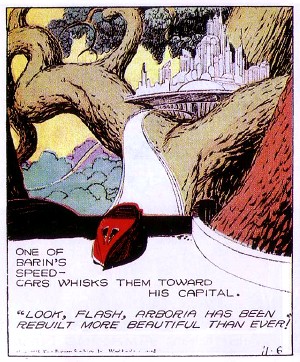


Arboria (1936)


Detalhe, o reino é governado pelo príncipe Barin (nome bem tolkieniano, hein?) cujo visual é inspirado na caracterização de Robin Hood de Douglas Fairbanks e um ano anterior à versão clássica de Errol Flyn, por sua vez calcadas na representação do personagem dada no Ivanhoé do Walter Scott (foi modelo pro Faramir de Tolkien tb, com o bando dos rangers em Ithílien lembrando o bando de companheiros de "Locksley"


Caras Galadhon (1954)


World Tree de World of Warcraft III,2002


HomeTree Avatar (2010)

Beren e Lúthien: mulher nativa apaixonando-se pelo estrangeiro "terrestre" é um dos maiores clichês das histórias de fantasia e ficção e começou bem antes de Tolkien ter sido publicado ( embora não tão antes dele ter começado a escrever os contos da Terra-Média. E, óbvio não parou com eles,vide Pocanhontas, Dança com Lobos e Fernygully, algumas das ( admitidas) principais referências modernas de Avatar e outras obras com as mesmas fontes como Atlantis da Disney ou Stargate o longa dos irmãos Emmerich)

A principal influência do Cameron nesse aspecto foi, confessadamente, o romance A Princesa de Marte de Edgar Rice Burroughs (1912), onde John Carter por "projeção astral", portanto gerando um "avatar", renascendo em outro mundo , Marte, Barsoom, acaba conhecendo a princesa nativa, Dejah Thoris e casando com ela .Foi a inspiração principal para Flash além de Buck Rogers ( que tb copiava John Carter).

O próprio Edgar Rice Burroughs foi inspirado pelo Ela de Rider Haggard (1887),livro admirado por Tolkien , que trazia a versão original da "nativa", no caso rainha de reino nas Cavernas ( Menegroth e Melian like), imortal de longos cabelos negros, superpoderosa, apaixonada num mortal. Também possuia um espelho d'água mágico como Galadriel. Não é à toa que a protótipo de Neytiri, Dejah Thoris de John Carter foi sucedida nos livros de Tarzan por La de Opar (o nome sendo a forma francesa de "She")


Ayesha, a mãe das mil e uma Neytiris


Essa personagem, Ayesha ( segundo Haggard pronuncia-se Asha, mas, segundo os árabes é Aisha, nome da esposa favorita do profeta Maomé e da mãe de Boabdil , ultimo rei mouro de Granada, ambas verdadeiras feras em forma de mulher), foi o template para aspectos de todas elas: Neytiri, Princesa Aura e Rainha Azura de Flash Gordon , Fênix, Ororo, Paragona e Selene nos comics da Marvel Comics, Dejah Thoris, Lúthien, Melian, Galadriel e Akasha a rainha dos condenados, vampira imortal de Anne Rice, evocando tanto Ayesha quanto Akivasha do Robert E.Howard.


Dejah Thoris

Galadriel in aParallel Universe


Leia Organa de Star Wars, descrita como sendo um combo de Dejah Thoris e Galadriel em uma das versões do roteiro de New Hope.


Luthien Tinuviel tendo um mau pressentimento


Circe da DC Comics,o maior análogo da parte má de Ayesha no Universo da editora


Karnilla e seu amado Balder da Marvel, outra análoga rainha feiticeira de reino cavernoso

Versão cute mangática da ilustração anterior: reparem na inversão de papéis

Já o próprio Rider Haggard usou vários templates: entre eles o anjo da verdade persa "asha", a deusa "Hela" nórdica, e , para o relacionamento mortal-imortal , Siegfried(Sigurd) e Brunhilda (abandonou a imortalidade) da mitologia nórdica e Cuchulain e a deusa Fand da mitologia céltica). Correndo por fora, nos aspectos mais nocivos da personagem, temos também a Lamia de Keats (1819) e Carmilla de Sheridan Le Fanu (1872).

Então, convenhamos, Tolkien está longe de ter sido inventor do ( hoje) clichê enredo dos apaixonados de culturas diferentes, separados por detalhes raciais como imortalidade , vampirismo ( uuupsss!!!), pais e esposos furiosos e feitiços de perda de memória.Já é algo que tem diversos antecedentes proeminentes, inclusive a Flauta Mágica, a ópera de Mozart (1791).

E vale dizer:a descrição detalhada de Melian dada por Tolkien nos Contos Perdidos, com um vestido negro, rajado com prata, praticamente faz dela uma versão da "Rainha da Noite" desta ópera tal como costuma ser representada lá.

'Slender and very dark of hair,said Veanne, 'and her skin was white and pale, but her eyes shone and seemed deep, and she was clad in filmy garments most lovely yet of black,jet-spangled and girt with silver.If ever she sang, or if she danced, dreams and slumbers passed over your head and made it heavy. Indeed she was a sprite that escaped from Lorien's gardens before even Kor was built, and she wandered in the wooded places of the world, and nightingales went with her and often sang about her. It was the song of these birds that smote the ears of Tinwelint, leader of that tribe of the Eldar that after were the Solosimpi the pipers of the shore, as he fared with his companions behind the horse of Orome from Palisor.


-Esbelta y de cabellos muy oscuros -dijo Véannë- y tenía la piel blanca y pálida, pero los ojos le brillaban y parecían ser profundos, y estaba cubierta con las más hermosas y tenues vestimentas negras con adornos color azabache y un cinturón de plata. Cuando cantaba o bailaba se apoderaban de ti los sueños y el letargo y te sentías adormecer. En realidad, era un espíritu que había huido de los jardines de Lórien aun antes de la construcción de Kôr y vagaba por los bosques del mundo acompañada de ruiseñores que solían cantar a su alrededor. Fue el canto de esos pájaros lo que asombró a Tinwelint, el jefe de esa tribu de los Eldar de la que nacieron después los Solosimpi, los flautistas de la costa, cuando se alejó de Palisor con sus compañeros, a la zaga del caballo de Orómë.


Até Shakespeare brincou com isso no seu Sonho de Uma Noite de Verão (1596) onde a Fada Titânia é enfeitiçada pelo marido e se apaixona por um mortal com a cabeça de burro. Isso para não falarmos do caso já mencionado por aqui de Selene e Endimion na mitologia grega.


Vou começar a blogar aqui uma lista de bons sites e resenhas do Avatar

Revolucionário da tradição por Fernando Veríssimo

James Cameron joga Warcraft?

A típica reação dos conservadores americanos ao filme ( delícia!!)

O que tende a incomodar os os conservadores-Comparação com Out of the Silent Planet e Perelandra

O efeito blue do Avatar e C.S.Lewis

O efeito blue. Lewis e Aldoux Huxley
O Avatar que quase foi.Comparação com o roteiro original

Grace e a Deusa uma análise do Panteísmo Cristão do Avatar

Interpretação Esotérica de Avatar ligando-o ao Simbolismo Maçônico

Interpretação do Avatar-Gaia hipótese e ciência holística.

O racismo de Avatar? O Mito do Messias "branco"


Blog do André Forastieri e sua análise do Avatar e da carreira de Cameron

Originalidade no tradicional=uma avaliação prévia do Avatar

Avatar poderia ser uma cópia de Aida , rainha da Floresta, desenho italiano de 2001?

Avatar é clichê mas responde tudo

Não apenas assista Avatar, "veja-o com o que ele contém"

A Espiritualidade do Avatar

A versão original do roteiro feita em 1995

Mais uma diatribe conservadora contra o Avatar e seus subtextos, tb analisa os dos demais filmes de Cameron. Brilhante!!
Análise dos temas inclusive do "estupro/comunhão com a fauna e flora

Avatar: An Anarcho-Primitivist Picture of the History of the World

The Avatar backlash

A lista "completa" de coisas que supostamente Avatar copiou

Entrevista com Cameron
Analise-Avatar, Miyazaki e Ecologia.

Avatar, o Bom, o Mau e o Feio

Interviews Cameron e Peter Jackson

Comparação fofa com Ferngully

Entrevista do Cameron

"That’s how I pitched it. I told the studio if it was FernGully with better effects! That made them nervous."

Reaçao original quanto as chances de indicaçoes ao Oscar

Avatar frustrou expectativas?

Entrevista com fontes de Avatar-Kipling

Entrevista-Avatar aliens
Triunfo de Guerra ao Terror contra Avatar reflete o predominio da mentalidade conservadora da Direita Americana="Patriotismo vence o Antiamericanismo

Avatar nao e racista
As virtualidades em Avatar

Mensagem secreta decodificada em Avatar-

Review legal
Excelente analise-comparaçao com Fire and Ice
A natureza mimetica de Avatar e a fantasia-Avatar e a fantasia tem meritos?

Comparaçao com Word for World is Forest

Ganhou a máquina de guerra
por que guerra ao terror venceu avatar na disputa-pelo oscar 2010

james-cameron-avatar-new-yorker-article

quinta-feira, 4 de fevereiro de 2010

A Alquimia do Fogo Secreto e o "fogo" dos Silmarils


Todo mundo ao ler o Senhor dos Anéis a primeira vez, ou ao assistir o primeiro filme da Trilogia Cinematográfica de Peter Jackson, fica intrigado com as palavras de Gandalf diante do Balrog:

Sou um servo do Fogo Secreto, manipulador da Chama de Anor, o Fogo Negro não te valerá , Chama de Udûn. Retorna para as Sombras. Não podes passar,

Ao lerem o Silmarillion ficam cientes de que o Fogo Secreto é a Chama Imperecível contendo o poder criativo de Eru Ilúvatar , que foi colocado por ele, crepitando no centro do Universo, que é Eä, tornando-se o fulcro para a existência material de Tudo o que Existe no nível “abaixo”, porque derivativo e posterior”, de/a Eru e aos Ainur.

Mas o que vem exatamente a ser o Fogo Secreto, e qual a sua conexão exata com Eru Ilúvatar?


Tolkien respondeu essa pergunta para o Professor Clyde Kilby no final dos anos sessenta. No seu livro Tolkien e o Silmarillion, Kilby revela que:

Professor Tolkien falou comigo com algum detalhamento sobre o uso da palavra “sagrado” no Silmarillion. Muito especificamente, ele me disse que “o Fogo Secreto enviado para crepitar no centro do Mundo” no começo era o Espírito Santo


Então, tecnicamente, Tolkien está dizendo que uma porção do Espírito de Deus, é imanente a todas as coisas que existem, sendo a base mantenedora do Cosmo.É uma idéia que passa perto de dar um substrato cristão para a noção panteísta de outras religiões do nosso mundo.

Tolkien reforçou essa idéia quando esclareceu na nota 11 ao Athrabeth Finrod Ah Anddreth publicada em HoME X, Morgoth’s Ring que:

Isso, de fato, já é entrevisto na Ainulindalë, na qual uma referência é feita à chama imperecível. Isso parece significar a atividade criativa de Eru (de alguma forma distinta proveniente dele ou do seu interior) pela qual as coisas podem ter uma existência “real” e independente (muito embora derivativa e criada). A chama imperecível é enviada por Eru, para habitar no coração do mundo, e a partir de então o mundo passa a existir no mesmo plano que os Ainur, e eles podem entrar nele. Mas esse não é de fato o mesmo que a re-entrada de Eru para derrotar Melkor. É ao invés uma referência para o mistério da “autoria”, pela qual o autor, enquanto permanece “de fora” e independente do seu trabalho, também “habita” nele, no seu plano derivativo, abaixo do seu próprio ser, como a fonte e a garantia da sua existência.


Dessa forma o Fogo Secreto corresponde ao que se costuma chamar de Anima Mundi, o princípio motriz da nossa realidade, literalmente, a “Alma do Mundo”. É muito interessante, pois comparar o modo com que Tolkien descreveu o Fogo Secreto na nota acima com a descrição do processo de criação dos Silmarils, as jóias feitas pelo artífice élfico, Fëanor, que constituem o “pomo da discórdia” da principal parte do ciclo mitológico da Primeira Era.


E ele se perguntava como a luz das Árvores, a glória do Reino Abençoado, poderia manter-se imperecível. Começou, então, um trabalho longo e secreto, para o qual recorreu a todo o seuconhecimento, seu poder e sua habilidade sutil. E, ao final de tudo, fez as Silmarils.
Como três magníficas pedras preciosas eram elas na forma. Mas não antes do Fim, quando retornará Fëanor, que pereceu antes que o Sol fosse criado, e agora está sentado nos Palácios da Espera e não surge mais entre seus parentes; somente depois que o Sol passar, e a Lua cair, será conhecido de que substância elas eram feitas. Aparentemente do cristal dos diamantes e, no entanto, mais duras do que ele, de tal modo que nenhuma violência pudesse danificá-las ou quebrá-las no Reino de Arda. Contudo, esse cristal estava para as Silmarils como o corpo para os Filhos de Ilúvatar: a morada do fogo interior, que se encontra dentro dele e, ainda assim, em todas as suas partes; e que é sua vida. E o fogo interior das Silmarils, Fëanor criou a partir dafusão da luz das Árvores de Valinor, que ainda sobrevive nas jóias, embora as Árvores já há muito tenham definhado e não brilhem mais.


A natureza do texto aí em cima sugere que os Silmarils eram uma representação do próprio Universo, a luz capturada das árvores de Valinor era como a brasa do Fogo Secreto , infundindo vida , estando simultaneamente em seu centro e em todas as suas partes. Os Silmarilli acabaram se tornando algo maior até do que seu criador pensava a princípio. Duas passagens do livro explicitam essa noção:


Todos os que moravam em Aman ficaram maravilhados e se deleitavam com a obra de Fëanor.E Varda consagrou as Silmarils, para que dali em diante nenhuma carne mortal, nem mãos impuras, nem nada de mau, pudesse tocá-las, que não se queimasse e murchasse. E Mandos previu que os destinos de Arda, da terra, do mar e do ar estavam dentro delas. O coração deFëanor apegou-se profundamente a essas gemas que ele próprio havia criado.

E Melian não tocou mais nesses assuntos com Galadriel; mas contou ao Rei Thingol tudo o que
ouvira a respeito das Silmarils.
- É uma questão importante - disse ela - na realidade, mais importante do que os próprios noldor conseguem compreender. Pois a Luz de Aman e o destino de Arda estão agora presos a essas gemas, a obra de Fëanor, que já se foi


Os Silmarils são um conceito aproximado com o da Pedra Filosofal. A criação suprema da Alquimia, uma maneira de fazer o microcosmo espelhar o que está na realidade superior macrocósmica. Ao criar os Silmarils, Fëanor doou um pedaço da sua alma, sua potência subcriativa, para formar o receptáculo para a luz combinada de Telperion e Laurelin. Isso explica o “atamento” de seu “coração” às jóias que ele concebera. Ele, talvez inadvertidamente, criou um elo entre ele e as gemas que era um precursor do que Sauron, mais tarde, fez com o Anel do Poder.

Assim os Silmarils eram produto de um ato mágico de criação “alquímica”, juntando um cristal “sintético” criado por Fëanor, a silima, com a luz mesclada das duas árvores de Valinor unidas pelo que pode ser um fragmento da alma de Fëanor , sua potência subcriativa destilada nos objetos. As gemas eram uma forma de miniaturização da “quintessência", da Anima mundi, contendo dentro de si a síntese dos 3 elementos que eram presididos e manipulados pelos principais Valar “masculinos”: Terra ( Aulë) , Ar (Manwë) e Àgua (Ulmo), cada um deles vinculado a uma das divisões dos Eldar em Valinor: os Noldor, os Vanyar e os Teleri.

Esse ato mágico de encadear e “encandear” a Anima Mundi só podia despertar mesmo a cobiça do vala rebelde, Melkor, que , em textos tardios foi explicitamente vinculado ao quarto elemento restante, o Fogo, o elemento que também, não tão coincidentemente assim, parecia estar conectado ao elfo “Espírito de Fogo”. Tanto ele quanto Melkor eram análogos de Prometeu, o titã grego que presenteou o fogo aos mortais, "roubando-o" dos deuses do Olimpo. Alquimistas e inventores “prometeanos” para os quais os fins justificavam os meios e que foram , direta e indiretamente, responsáveis pela Queda do Homem( e/ou Elfos) e o fim de uma “Era de Ouro”.

Do ponto de vista espiritual Fëanor deu à luz e a luz aos Silmarils, fazendo deles o receptáculo imperecível de sua própria essência vital

Dada essa qualidade de representação “fetichista”, simulacro, do Universo, então, simbólica e misticamente, a posse dos Silmarils por Melkor, e o engaste das pedras na Coroa de Ferro ostentada por ele era uma forma de atestar o seu domínio sobre os demais elementos de seus pares, Terra, Ar e Água, tendo aprisionado no interior da Jóia o “quinto elemento”, o Éter, que no caso era a luz pura quintessencial das árvores fundida a um receptáculo material pelo “fogo” alquímico de Fëanor.

Daí essa noção de que os “destinos de Arda estavam agora dentro das Jóias”, eis, também porque, depois do seu resgate de Thangorodrim , cada uma delas acabou “ se perdendo” elas ”encontraram seus antigos lares: uma no ar dos céus,outra no fogo do centro da Terra, e a outra nas profundezas das águas".

Não deixa de ser interessante que um dos livros dos Inklings, o segundo livro de ficção publicado por um dos membros do grupo, Many Dimensions, de Charles Williams, de 1931 , tratava justamente de uma pedra mágica feita da Matéria Primal com que o Mundo foi criado . Seria a pedra mágica da coroa de Salomão, como tendo sido, originalmente, uma gema importante da coroa de Lúcifer ( no livro chamado pelo seu nome muçulmano , Iblis) antes da sua queda.E o texto diz “que a derrota dele não teria sido assegurada até que a pedra caiu de sua cabeça”.Vê-se aí que vários ecos de feitos de Melkor e Sauron nessa passagem parecem evidentes, refletindo a criação da Coroa de Ferro e pressagiando a do Anel do Poder.

Vale lembrar que Melkor, assim como Fëanor, eram, simbólica e metaforicamente, em vários níveis, análogos de Lúcifer como significando o que seu nome é em grego: portadores da Luz e que, originalmente, os Silmarils desempenhavam um papel relativamente pequeno na mitologia do Livro dos Contos Perdidos.

Foi só a partir das versões do Legendarium feitas nos anos 30 que Tolkien realmente passou a enfatizar a importância mítica e temática dos Silmarils dando a eles a função do Sampo no Kalevala como centro da disputa entre os Poderes da Luz e da Escuridão.


É bem possível que a concepção pós anos 30 dos Silmarils refletisse esse romance de Charles Williams e sua possível fonte,uma lenda cabalística do Zohar onde Deus fez cair do céu uma “pedra fundamental” que era o alicerce do Mundo, uma pedra chamada Schethl'ya que foi:


cast by [God] into the abyss, so to form the basis of the world and
give birth thereto. [...] it was like a cubical stone or altar, for
its extremity was concealed in the depth, while its surface or summit
rose above the chaos. It was the central point in the immensity of the
world, the corner-stone, the tried stone, the sure foundation, but
also the stone which the builders rejected [...] It is like the lapis
exilis of the German Graal legend, and of Alchemy according to the
Second Raymund Lully, for it appears to be a slight stone; it is
supposed to have been carried by Aaron when he entered the Holy Place,
and it was held in the hands of David when he desired to contemplate
close at hand the glory of his Master. In a sense it fell from heaven,
like the stone from the crown of Lucifer, and again it was overturned
by the iniquity of man, until Jacob restored it to an upright
position. Solomon was also one of those who restored it, and thereon
he built the Sanctuary [...] the Zoharic myth of creation resides in
the fact that this stone was inscribed with the Divine Name before it
was cast into the abyss." (Holy Kabbalah 228-9)


Mais uma vez Tolkien parece ter criado algo sumamente original e poético em cima de uma diversidade de fontes heterogêneas que , uma vez pesquisadas, ajudam a “lançar luz” sobre o trabalho dele.

sexta-feira, 29 de janeiro de 2010

Tolkien e o Silmarillion de Clyde Kilby. O Segredo do Fogo Secreto


O professor Clyde Kilby esteva falando com Tolkien ajudando-o a organizar a mitologia do Silmarillion no fim dos anos sessenta. No meio dos setenta, um ano antes da publicação do Silmarillion ele lançou um livro de reminiscências dessas interações com Tolkien onde ele enfatizou algumas das excentricidades e paradoxos da personalidade de JRRT.


O nascimento de Narya, Pássaro da Neve no traço de John Byrne, teria Fëanor também dado à luz aos Silmarils dada a similaridade com a capa do livro acima?

Nesse pedaço ele cita Tolkien afirmando que o Fogo Secreto era o Espírito Santo.
Professor Tolkien talked to me at some length about the
use of the word "holy" in The Silmarillion. Very specifically
he told me that the "Secret Fire sent to burn at the heart ofthe World" in the beginning was the Holy Spirit.27 He de-
scribed his problem in depicting the fall of mankind near
the beginning of the story. "How far we have fallen!" he exclaimed—so far, he felt, that it would seem impossible even
to find an adequate prototype or to imagine the contrast be-
tween Eden and the disaster which followed.
I only wish that at this point I felt able to discuss the pattern of Tolkien's myth in relation to the whole of mythology. There is no doubt of its general similarity in such ar-
chetypes as a creator, a creation, a "high" race and a hierarchy, protagonists and antagonists, a sense of doom,heroic undertakings, conduct measured in terms of moral
law, and an ending with a new earth and heaven. There
are many discussions which endeavor to decide whether
myth originates in history, religion, nature, the imagina-
tions of men or all of these.
My impression is that The Silmarillion is oriented as
much on a Biblical pattern as it is on that of Norse and
other mythologies. One interesting instance of this is the
depiction of light in Middle-earth before the creation of sun
and moon, following the model of the early verses of Gene-
sis. Many believe there was, as in The Silmarillion, a long
period of time between the two kinds of light. Milton's ex-
planation in Paradise Lost is an example:

"Let there be Light!" said God; and forthwith Light
Ethereal, first of things, quintessence pure,
Sprung from the Deep, and from her native East
To journey through the aery gloom began,
Sphered in a radiant cloud-for yet the Sun
Was not; she in a cloudy tabernacle
Sojourned the while. (VII, 243249)

(...)

In this connection I should mention a lengthy account
which Tolkien asked me to read. It was in the form of a Job like conversation on soul and body and the possible purpose of God in allowing the Fall so that He could manifest

His own sovereignty over Satan all the more, of Christ's
incarnation, the spread of His light from one person to an-
other, and the final consummation at Christ's return. He
said he was not certain whether to include this in The Silmarillion or publish it separately.


segunda-feira, 25 de janeiro de 2010

Censura em Crise Infinita!! Páginas cortadas.

A verdadeira causa, que todo mundo hj esqueceu, pros cortes feitos na mini é o infame decreto muralha da China feipo pela Karen Berger. Citações com as provas logo abaixo.
E aí, logo em seguida, o scan da página de trade de Infinite Crisis contendo as páginas deletadas já completamente desenhadas por Phil Jimenez. Trazia Hector Hall e Furia II chegando ao Olimpo Pré-Crise escoltados por Daniel Hall, o atual Sandman e encontrando com seu avô materno, o Steve Pré-Crise da Terra 2.

Aproveitem


http://www.comicbookresources.com/news/newsitem.cgi?id=7136

Brad Curran: Was there any difference in working with DCU editorial and Vertigo, besides the content?
Mike Carey: DCU/Vertigo - it's a Chinese walls kind of thing: the two establishments are separate, and they see themselves as separate.


http://www.sequentialtart.com/archive/sept02/mcarey2.shtml

ST: With appearances in Young All Stars, Wonder Woman, Infinity Inc., and Sandman, The Furies have been one of the offshoot groups who tie the mainstream DCU with Vertigo. What makes these characters well suited to both universes?

MC: I have to confess at this point that the Furies of the title are the Greek spirits of vengeance, as shown in The Kindly Ones, rather than the super-team. So the only DCU character who appears in the book is Lyta herself, who has a sort of unique, borderline status because she was so deeply entrenched in Sandman continuity that she couldn't be extricated, while at the same time being a long-term member of a DCU superhero team.

Resoluções de Ano Novo dos Dark Lords


Melkinho

Nosso querido Dark Lord deseja um Feliz Ano Novo (tão vendo as "luzes natalinas" na coroa de Ferro logo acima mostrando que ele está cheio de boa vontade para com os homens?) mas para isso ele compilou uma lista de cem coisas que os Senhores das Trevas devem ou não devem fazer Ele também deseja ficar mais bonito como costuma ser representado pelos artistas "mudernos" que acham que ele é um herói prometeano mal-compreendido

Primeiro passo ir a um salão de beleza ( como aí embaixo Melkinho, lindérrimo ( vejam essa cabeleira longa e alva, lembrando o herói de Devil May Cry ou o novo Dark Lord dos games) pedindo pra Húrin Thalion fazer barba, cabelo e bigode nele antes de quebrar a lâmina e amaldiçoar sua família...


Depois conseguir uma bela garota...


E aí cantar a melô do Dark Lord


The Top 100 Things I'd Do
If I Ever Became An Evil Overlord

My Legions of Terror will have helmets with clear plexiglass visors, not face-concealing ones.
My ventilation ducts will be too small to crawl through.
My noble half-brother whose throne I usurped will be killed, not kept anonymously imprisoned in a forgotten cell of my dungeon.
Shooting is not too good for my enemies.
The artifact which is the source of my power will not be kept on the Mountain of Despair beyond the River of Fire guarded by the Dragons of Eternity. It will be in my safe-deposit box. The same applies to the object which is my one weakness.
I will not gloat over my enemies' predicament before killing them.
When I've captured my adversary and he says, "Look, before you kill me, will you at least tell me what this is all about?" I'll say, "No." and shoot him. No, on second thought I'll shoot him then say "No."
After I kidnap the beautiful princess, we will be married immediately in a quiet civil ceremony, not a lavish spectacle in three weeks' time during which the final phase of my plan will be carried out.
I will not include a self-destruct mechanism unless absolutely necessary. If it is necessary, it will not be a large red button labelled "Danger: Do Not Push". The big red button marked "Do Not Push" will instead trigger a spray of bullets on anyone stupid enough to disregard it. Similarly, the ON/OFF switch will not clearly be labelled as such.
I will not interrogate my enemies in the inner sanctum -- a small hotel well outside my borders will work just as well.
I will be secure in my superiority. Therefore, I will feel no need to prove it by leaving clues in the form of riddles or leaving my weaker enemies alive to show they pose no threat.
One of my advisors will be an average five-year-old child. Any flaws in my plan that he is able to spot will be corrected before implementation.
All slain enemies will be cremated, or at least have several rounds of ammunition emptied into them, not left for dead at the bottom of the cliff. The announcement of their deaths, as well as any accompanying celebration, will be deferred until after the aforementioned disposal.
The hero is not entitled to a last kiss, a last cigarette, or any other form of last request.
I will never employ any device with a digital countdown. If I find that such a device is absolutely unavoidable, I will set it to activate when the counter reaches 117 and the hero is just putting his plan into operation.
I will never utter the sentence "But before I kill you, there's just one thing I want to know."
When I employ people as advisors, I will occasionally listen to their advice.
I will not have a son. Although his laughably under-planned attempt to usurp power would easily fail, it would provide a fatal distraction at a crucial point in time.
I will not have a daughter. She would be as beautiful as she was evil, but one look at the hero's rugged countenance and she'd betray her own father.
Despite its proven stress-relieving effect, I will not indulge in maniacal laughter. When so occupied, it's too easy to miss unexpected developments that a more attentive individual could adjust to accordingly.
I will hire a talented fashion designer to create original uniforms for my Legions of Terror, as opposed to some cheap knock-offs that make them look like Nazi stormtroopers, Roman footsoldiers, or savage Mongol hordes. All were eventually defeated and I want my troops to have a more positive mind-set.
No matter how tempted I am with the prospect of unlimited power, I will not consume any energy field bigger than my head.
I will keep a special cache of low-tech weapons and train my troops in their use. That way -- even if the heroes manage to neutralize my power generator and/or render the standard-issue energy weapons useless -- my troops will not be overrun by a handful of savages armed with spears and rocks.
I will maintain a realistic assessment of my strengths and weaknesses. Even though this takes some of the fun out of the job, at least I will never utter the line "No, this cannot be! I AM INVINCIBLE!!!" (After that, death is usually instantaneous.)
No matter how well it would perform, I will never construct any sort of machinery which is completely indestructible except for one small and virtually inaccessible vulnerable spot.
No matter how attractive certain members of the rebellion are, there is probably someone just as attractive who is not desperate to kill me. Therefore, I will think twice before ordering a prisoner sent to my bedchamber.
I will never build only one of anything important. All important systems will have redundant control panels and power supplies. For the same reason I will always carry at least two fully loaded weapons at all times.
My pet monster will be kept in a secure cage from which it cannot escape and into which I could not accidentally stumble.
I will dress in bright and cheery colors, and so throw my enemies into confusion.
All bumbling conjurers, clumsy squires, no-talent bards, and cowardly thieves in the land will be preemptively put to death. My foes will surely give up and abandon their quest if they have no source of comic relief.
All naive, busty tavern wenches in my realm will be replaced with surly, world-weary waitresses who will provide no unexpected reinforcement and/or romantic subplot for the hero or his sidekick.
I will not fly into a rage and kill a messenger who brings me bad news just to illustrate how evil I really am. Good messengers are hard to come by.
I won't require high-ranking female members of my organization to wear a stainless-steel bustier. Morale is better with a more casual dress-code. Similarly, outfits made entirely from black leather will be reserved for formal occasions.
I will not turn into a snake. It never helps.
I will not grow a goatee. In the old days they made you look diabolic. Now they just make you look like a disaffected member of Generation X.
I will not imprison members of the same party in the same cell block, let alone the same cell. If they are important prisoners, I will keep the only key to the cell door on my person instead of handing out copies to every bottom-rung guard in the prison.
If my trusted lieutenant tells me my Legions of Terror are losing a battle, I will believe him. After all, he's my trusted lieutenant.
If an enemy I have just killed has a younger sibling or offspring anywhere, I will find them and have them killed immediately, instead of waiting for them to grow up harboring feelings of vengeance towards me in my old age.
If I absolutely must ride into battle, I will certainly not ride at the forefront of my Legions of Terror, nor will I seek out my opposite number among his army.
I will be neither chivalrous nor sporting. If I have an unstoppable superweapon, I will use it as early and as often as possible instead of keeping it in reserve.
Once my power is secure, I will destroy all those pesky time-travel devices.
When I capture the hero, I will make sure I also get his dog, monkey, ferret, or whatever sickeningly cute little animal capable of untying ropes and filching keys happens to follow him around.
I will maintain a healthy amount of skepticism when I capture the beautiful rebel and she claims she is attracted to my power and good looks and will gladly betray her companions if I just let her in on my plans.
I will only employ bounty hunters who work for money. Those who work for the pleasure of the hunt tend to do dumb things like even the odds to give the other guy a sporting chance.
I will make sure I have a clear understanding of who is responsible for what in my organization. For example, if my general screws up I will not draw my weapon, point it at him, say "And here is the price for failure," then suddenly turn and kill some random underling.
If an advisor says to me "My liege, he is but one man. What can one man possibly do?", I will reply "This." and kill the advisor.
If I learn that a callow youth has begun a quest to destroy me, I will slay him while he is still a callow youth instead of waiting for him to mature.
I will treat any beast which I control through magic or technology with respect and kindness. Thus if the control is ever broken, it will not immediately come after me for revenge.
If I learn the whereabouts of the one artifact which can destroy me, I will not send all my troops out to seize it. Instead I will send them out to seize something else and quietly put a Want-Ad in the local paper.
My main computers will have their own special operating system that will be completely incompatible with standard IBM and Macintosh powerbooks.
If one of my dungeon guards begins expressing concern over the conditions in the beautiful princess' cell, I will immediately transfer him to a less people-oriented position.
I will hire a team of board-certified architects and surveyors to examine my castle and inform me of any secret passages and abandoned tunnels that I might not know about.
If the beautiful princess that I capture says "I'll never marry you! Never, do you hear me, NEVER!!!", I will say "Oh well" and kill her.
I will not strike a bargain with a demonic being then attempt to double-cross it simply because I feel like being contrary.
The deformed mutants and odd-ball psychotics will have their place in my Legions of Terror. However before I send them out on important covert missions that require tact and subtlety, I will first see if there is anyone else equally qualified who would attract less attention.
My Legions of Terror will be trained in basic marksmanship. Any who cannot learn to hit a man-sized target at 10 meters will be used for target practice.
Before employing any captured artifacts or machinery, I will carefully read the owner's manual.
If it becomes necessary to escape, I will never stop to pose dramatically and toss off a one-liner.
I will never build a sentient computer smarter than I am.
My five-year-old child advisor will also be asked to decipher any code I am thinking of using. If he breaks the code in under 30 seconds, it will not be used. Note: this also applies to passwords.
If my advisors ask "Why are you risking everything on such a mad scheme?", I will not proceed until I have a response that satisfies them.
I will design fortress hallways with no alcoves or protruding structural supports which intruders could use for cover in a firefight.
Bulk trash will be disposed of in incinerators, not compactors. And they will be kept hot, with none of that nonsense about flames going through accessible tunnels at predictable intervals.
I will see a competent psychiatrist and get cured of all extremely unusual phobias and bizarre compulsive habits which could prove to be a disadvantage.
If I must have computer systems with publically available terminals, the maps they display of my complex will have a room clearly marked as the Main Control Room. That room will be the Execution Chamber. The actual main control room will be marked as Sewage Overflow Containment.
My security keypad will actually be a fingerprint scanner. Anyone who watches someone press a sequence of buttons or dusts the pad for fingerprints then subsequently tries to enter by repeating that sequence will trigger the alarm system.
No matter how many shorts we have in the system, my guards will be instructed to treat every surveillance camera malfunction as a full-scale emergency.
I will spare someone who saved my life sometime in the past. This is only reasonable as it encourages others to do so. However, the offer is good one time only. If they want me to spare them again, they'd better save my life again.
All midwives will be banned from the realm. All babies will be delivered at state-approved hospitals. Orphans will be placed in foster-homes, not abandoned in the woods to be raised by creatures of the wild.
When my guards split up to search for intruders, they will always travel in groups of at least two. They will be trained so that if one of them disappears mysteriously while on patrol, the other will immediately initiate an alert and call for backup, instead of quizzically peering around a corner.
If I decide to test a lieutenant's loyalty and see if he/she should be made a trusted lieutenant, I will have a crack squad of marksmen standing by in case the answer is no.
If all the heroes are standing together around a strange device and begin to taunt me, I will pull out a conventional weapon instead of using my unstoppable superweapon on them.
I will not agree to let the heroes go free if they win a rigged contest, even though my advisors assure me it is impossible for them to win.
When I create a multimedia presentation of my plan designed so that my five-year-old advisor can easily understand the details, I will not label the disk "Project Overlord" and leave it lying on top of my desk.
I will instruct my Legions of Terror to attack the hero en masse, instead of standing around waiting while members break off and attack one or two at a time.
If the hero runs up to my roof, I will not run up after him and struggle with him in an attempt to push him over the edge. I will also not engage him at the edge of a cliff. (In the middle of a rope-bridge over a river of molten lava is not even worth considering.)
If I have a fit of temporary insanity and decide to give the hero the chance to reject a job as my trusted lieutentant, I will retain enough sanity to wait until my current trusted lieutenant is out of earshot before making the offer.
I will not tell my Legions of Terror "And he must be taken alive!" The command will be "And try to take him alive if it is reasonably practical."
If my doomsday device happens to come with a reverse switch, as soon as it has been employed it will be melted down and made into limited-edition commemorative coins.
If my weakest troops fail to eliminate a hero, I will send out my best troops instead of wasting time with progressively stronger ones as he gets closer and closer to my fortress.
If I am fighting with the hero atop a moving platform, have disarmed him, and am about to finish him off and he glances behind me and drops flat, I too will drop flat instead of quizzically turning around to find out what he saw.
I will not shoot at any of my enemies if they are standing in front of the crucial support beam to a heavy, dangerous, unbalanced structure.
If I'm eating dinner with the hero, put poison in his goblet, then have to leave the table for any reason, I will order new drinks for both of us instead of trying to decide whether or not to switch with him.
I will not have captives of one sex guarded by members of the opposite sex.
I will not use any plan in which the final step is horribly complicated, e.g. "Align the 12 Stones of Power on the sacred altar then activate the medallion at the moment of total eclipse." Instead it will be more along the lines of "Push the button."
I will make sure that my doomsday device is up to code and properly grounded.
My vats of hazardous chemicals will be covered when not in use. Also, I will not construct walkways above them.
If a group of henchmen fail miserably at a task, I will not berate them for incompetence then send the same group out to try the task again.
After I captures the hero's superweapon, I will not immediately disband my legions and relax my guard because I believe whoever holds the weapon is unstoppable. After all, the hero held the weapon and I took it from him.
I will not design my Main Control Room so that every workstation is facing away from the door.
I will not ignore the messenger that stumbles in exhausted and obviously agitated until my personal grooming or current entertainment is finished. It might actually be important.
If I ever talk to the hero on the phone, I will not taunt him. Instead I will say this his dogged perseverance has given me new insight on the futility of my evil ways and that if he leaves me alone for a few months of quiet contemplation I will likely return to the path of righteousness. (Heroes are incredibly gullible in this regard.)
If I decide to hold a double execution of the hero and an underling who failed or betrayed me, I will see to it that the hero is scheduled to go first.
When arresting prisoners, my guards will not allow them to stop and grab a useless trinket of purely sentimental value.
My dungeon will have its own qualified medical staff complete with bodyguards. That way if a prisoner becomes sick and his cellmate tells the guard it's an emergency, the guard will fetch a trauma team instead of opening up the cell for a look.
My door mechanisms will be designed so that blasting the control panel on the outside seals the door and blasting the control panel on the inside opens the door, not vice versa.
My dungeon cells will not be furnished with objects that contain reflective surfaces or anything that can be unravelled.
If an attractive young couple enters my realm, I will carefully monitor their activities. If I find they are happy and affectionate, I will ignore them. However if circumstance have forced them together against their will and they spend all their time bickering and criticizing each other except during the intermittent occasions when they are saving each others' lives at which point there are hints of sexual tension, I will immediately order their execution.
Any data file of crucial importance will be padded to 1.45Mb in size.
Finally, to keep my subjects permanently locked in a mindless trance, I will provide each of them with free unlimited Internet access.


Nessa última...
ô,ô, I have a bad feeling about this...

quarta-feira, 13 de janeiro de 2010

Tolkien , Rackham e o Medo que vem do Mar.


Mor-dredd- Medo do mar. Esse parece ter sido um veio temático explorado amiúde por Tolkien na sua obra ficcional. O mar exerce em Tolkien, ao mesmo tempo, medo e fascínação, atraindo e enchendo de terror. Tanto é que, na prática, Tolkien criou dois "deuses" do Mar para explicar a variabilidade do comportamento do oceano: Ulmo era "profundo" e calmo, poderoso vala cujo nome significa "vertedor" e Ossë, cujo nome lembra Oceano ( um dos deuses titãs e dos numerosos deuses pelágicos dos gregos) era o maia que presidia o mar enquanto força da Natureza indomada e traiçoeira, possuindo uma esposa que era , mormente, calma e que aplacava sua ira , mas que quando entristecida podia fazer o mar se encapelar em vagas que arrastavam as pessoas para o fundo. Vale lembrar que, originalmente,Ossë era um vala como Ulmo era e não um servidor maia deste último.


Tolkien também era um admirador da obra de Arthur Rackam , ilustrador das óperas de Richard Wagner, e esta gravura de sua autoria colada acima mostra a deusa do mar, Ran, esposa meio colérica do deus do mar, Aegir, trazendo à mente o episódio algo similar entre Tuor e Ulmo nas costas de Beleriand.

The graphical representation of literary trees must also be considered,
as illustrations can affect how a reader apprehends the text. Arthur
Rackham, a prime example in the context of this discussion, was perhaps
best known for producing images of trees with human attributes (Hamilton
13).2 Rackham’s credits include Fairy Tales of the Brothers Grimm (1900
and 1909), Shakespeare’s Macbeth (1908) and The Tempest (1926), Charles
S. Evans’s The Sleeping Beauty (1920), Milton’s Comus (1921), Hans Christian
Andersen’s Fairy Tales (1932), and Kenneth Grahame’s The Wind in
the Willows (1940), all of which offered Rackham the opportunity—with
threatening or enchanted woods, trees that speak or are otherwise conscious,
or spirits trapped in trees—to draw anthropomorphic trees (Hamilton
185–86). Although Rackham’s illustrations appear in no text featuring
trees of the third or fourth categories (i.e., trees that physically move
as Primary World trees cannot), his suggestions of arm-like branches,
leg-like roots, and facial features on tree trunks influence how the trees
in these stories have been received. While these trees speak, think, or exude
an ominous aura without moving in ways that Primary World trees
cannot, the vivid corporeal texture of Rackham’s drawings make the
oral, mental, and psychic faculties of these trees explicitly physical. Trees
that belonged—by their authors’ intentions—to the first and second


Vide aí embaixo a citação da biografia do Carpenter


Tom was rescued, and survived to become
the hero of a poem by the children's father, "The Adventures of Tom
Bombadil', which was published in the Oxford Magazine in 1934. It tells
of Tom's encounters with 'Goldberry, the River-woman's daughter', with
the 'Old Man Willow' which shuts him up in a crack of its bole (an idea,
Tolkien once said, that probably came in part from Arthur Rackham's
tree-drawings)
, with a family of badgers, and with a 'Barrow-wight', a
ghost from a prehistoric grave of the type found on the Berkshire Downs
not far from Oxford.(...)


He was by now a very talented artist, although he had not the same skill at drawing figures as he had with landscapes. He was at his best when picturing his beloved trees, and like Arthur Rackham (whose work he admired) he could give to twisted root and branch a sinister mobility that was at the same time entirely true to nature.


Não por acaso, Arthur Rackham foi um notável ilustrador do Anel do Nibelungo, a tetralogia de Richard Wagner.

sábado, 2 de janeiro de 2010

Capitão Power episódio final -A Retribuição e seu "irmão" detonador-Z'Ha'Dum.

O final "marvado" de Capitão Power e sua conclusão que acabou comovendo até quem não acompanhava a série regularmente, como eu ( Porque óbvio de duas uma , se vc pega uma série que não acompanha ou assistirá o mesmo episódio fraco N vezes ou, justamente, aquele episódio relembrado pelos fãs ardorosos para o qual eles tiram os lencinhos do bolso.

Baseada em um episódio real da vida do próprio roteirista Joe (ahá) Michael Straczynski que precisou exorcizar seu trauma pelo menos um bom par de vezes dando em dois momentos emblemáticos.

"I've never talked about this before-said I was in a thoughtful mood-but I've known several people, friends, who've taken their own lives. In one case, I spoke to her just beforehand. Tried, through the phone lines, to reach her one more time, pull her back from the edge. I couldn't. Years pass. Time comes for me to write the last filmed episode of Power."'

"Jennifer Chase is going to die, partly of her injuries, partly of her own volition. Part of my life went into that scene, in the way it was constructed, and what was said. And what was not said, what never had the chance to be said, and thus still burns. I knew that, at the crucial moment of that scene, he couldn't be near her, as I wasn't near my friend...it had to be long-distance, hearing but not seeing her, and the terrible pain of arriving too late. I cannot watch that episode without crying. Ever."


Comparem o I love you de outro "Joe", o John Sheridan no fantástico episódio final da terceira temporada de Babylon 5, Z'Ha'Dum.

Outro caso de I love you-Kaboom.