Desert in the Ocean Celtic Hagiography
The Celtic Christianity
e-Library
Source: Edition by Archbishop P. F. Moran
Translator: Denis O’Donoghue
Published: D. O’Donoghue, Brendaniana
Date of Translation: 1893
This text scanned by: Jonathan M. Wooding (29/4/2003) – re-use permitted with acknowledgement
Additional Comments: For convenience of use this translation has been subdivided to match the chapter divisions in Carl Selmer’s edition of 1959
I
St Brendan, son of Finnlug Ua Alta, of the race of Eoghan, was born in the marshy district of Munster He was famed for his great abstinence and his many virtues, and was the patriarch of nearly three thousand monks. While he was in his spiritual war fare, at a place called Ardfert-Brendan there came to him one evening, a certain father, named Barinthus, of the race of King Niall, who, when questioned by St Brendan, in frequent converse, could only weep, and cast himself prostrate, and continue the longer in prayer; but Brendan raising him up, em braced him, saying: ‘Father, why should we be thus grieved on the occasion of your visit? Have you not come to give us comfort? You ought, indeed, make better cheer for the brethren. In God’s name, make known to us the divine secrets, and refresh our souls by recounting to us the various wonders you have seen upon the great ocean.’ Then Barinthus, in reply, proceeds to tell of a certain island: ‘My dear child, Mernoc, the guardian of the poor of Christ, had fled away from me to become a solitary, and found, nigh unto the Stone mountain, an island full of delights. After some time I learned that he had many monks there in his charge, and that God had worked through him many marvels. I, therefore, went to visit him, and when I had approached within three days’ journey, he, with some of the brethren, came out to meet me, for God had revealed to him my advent. As we sailed unto the island the brethren came forth from their cells towards us, like a swarm of bees, for they dwelt apart from each other, though their intercourse was of one accord, well grounded in faith, hope, and charity; one refectory; one church for all, wherein to-discharge the divine offices. No food was served but fruits and nuts, roots and vegetables of other kinds. The brethren, after compline, passed the night in their respective cells until the cock-crow, or the bell tolled for prayer. When my dear son and I had traversed the island, he led me to the western shore, where there was a small boat, and he then said: ‘Father, enter this boat, and’ we will sail on to the west, towards the island called the Land of Promise of the Saints, which God will grant to those who succeed us in the latter days.’
When we entered the boat and set sail, clouds over shadowed us on every side, so dense that we could scarcely see the prow or the stern of the boat. After the lapse of an hour or so, a great light shone around us, and land appeared, spacious and grassy, and bearing all manner of fruits. And when the boat touched the shore; we landed, and walked round about the island for fifteen days, yet could not reach the limits thereof. No plant saw we there without its flower; no tree without its fruit; and all the stones thereon were pre cious gems. But on the fifteenth day we discovered a river flowing from the west towards the east, when, being at a loss what to do, though we wished to cross over the river, we awaited the direction of the Lord. While we thus considered the matter, there appeared suddenly before us a certain man, shining with a great light, who, calling us by our names, addressed us thus’: ‘Welcome, worthy brothers, for the Lord has revealed to yon the land He will grant unto His saints. There is one-half of the island up to this river, which you are not permitted to pass over; return, therefore, whence you came’ .
When he had ceased to speak, we asked him his name, and whence he had come. But he said: 'Why do you ask these questions? Should you not rather inquire about this island. Such as you see it now, so has it continued from the beginning of the world. Do you now need food or drink? Have you been weighed down by sleep, or shrouded in the darkness of the night I Know then for certain that here it is for ever day, without a shadow of darkness, for the Lord Jesus Christ is the light thereof, and if men had not trans gressed the commandment of God, in this land of delights would they have always dwelt.’
Hearing this we were moved to tears, and having rested awhile, we set out on our return journey, the man aforesaid accompanying us to the shore, where our boat was moored. When we had entered the boat, this man was taken from our sight, and we went on into the thick darkness we had passed through before, and thus unto the Island of delights. But when the brethren there saw us, they rejoiced with great joy at our return, as they had long bewailed our absence, and they said: ‘Why, O fathers, did you leave us, your little flock, to stray without a shepherd in the wilderness? We knew, indeed, that our abbot frequently departed somewhere from us, and remained away sometimes a month, sometimes a fortnight, or a week more or less.
When I heard this I tried to console them, and said: ‘Brethren, harbour no thought of evil, for your lives here are certainly passed at the very portals of paradise. Not far away from you lies the island, called the ‘Land of Promise of the Saints,’ where night never falls nor day closes; thither your abbot, Mernoc, resorts, as the angels of God watch over it. Do you not know, by the fragrance of our garments, that we have been in the paradise of God?’. They replied: ‘Yes, father, we knew well that you had been in the paradise of God, for we often found this fragrance from the garments of our abbot, which lingered about us for nearly forty days.’ I then told them that I had abided therein with my dear son, for a fortnight, without food or drink; yet, so complete was our’ bodily refreshment, that we would ‘seem to others to have been filled to repletion. ‘When forty days had passed, having received the bless ings of the abbot and the brethren, I came away with my companions, that I may return to my little cell to which I will go on to-morrow.
Having heard all this, St Brendan and his brethren cast themselves on the ground, giving glory to God in these words: ‘Righteous Thou art, O Lord, in all Thy ways, and holy in all Thy works, who hast revealed to Thy children so many and so great wonders; and blessed be Thou for Thy gifts, who hast this day refreshed, us all with this spiritual repast,’ ‘When these discourses were ended, St Brendan said: ‘Let us now proceed to the refection of the body, and the new command ment’. The night having passed, St Barinthus, receiving the blessing of the brethren, returned to his own cell.
II
St Brendan soon after selected from his whole community fourteen monks. Taking these apart, the venerable father Brendan retired with them into an oratory where he thus addressed them: ‘Dearly beloved fellow-soldiers of mine, I request your advice and assistance, for my heart and mind are firmly set upon one desire; if it be only God’s holy will, I have in my heart resolved to go forth in quest of the Land of Promise of the Saints, about which Father Barinthus discoursed to us. What do you think? What is your advice?’ But they, well knowing the purpose of their holy father, replied, as with one voice: ‘Father-abbot, your will is our will also. Have we not forsaken our parents? Have we not slighted our family prospects? Have we not committed into your hands even our very bodies? We are, therefore, ready to go with you, whether unto life or unto death, provided only we find such to be the will of God.’
III
St Brendan and the chosen brethren then decided to make a fast of forty days, at three days’ intervals, and afterwards to take their departure. Those forty days having elapsed, St Brendan, affectionately taking leave of his monks, and commending them to the special care of the Prior of his monastery, who was afterwards his successor there, sailed forth towards the west, with fourteen brethren, to the island wherein dwelt St Enda, and remained there three days and three nights.
IV
Having received the blessing of this holy father and all his monks, he proceeded to the remotest part of his own country, where his parents abode. However, he willed not to visit them, but went up to the summit of the mountain there, which extends far into the ocean, on which is ‘St Brendan’s Seat;’ and there he fitted up a tent, near a narrow creek, where a boat could enter. Then St Brendan and his companions, using iron implements, prepared a light vessel, with wicker sides and ribs, such as is usually made in that country, and covered it with cow-hide, tanned in oak-bark, tarring the joints thereof, and put on board provisions for forty days, with butter enough to dress hides for covering the boat and all utensils needed for the use of the crew.
He then ordered the monks to embark, in the name of the Father, and of the Son, and of the Holy Ghost.
IV
But while he stood on the shore and blessed the little creek, behold three more monks from his monastery came up, and cast themselves at his feet, saying: ‘O dearest father, suffer us, for the love of Christ, to accompany you on your voyage, otherwise we will die hereof hunger and thirst, for we are resolved to travel with thee all the days of our lives.’ When the man of God saw their great urgency, he ordered them to embark, saying: ‘Have your will, my children;’ but adding: ‘I know well why you have come hither. One of you has acted well, for God had provided for him an excellent place; but for two others, He has appointed harm and judgment.’
VI
St Brendan then embarked, and they set sail towards the summer solstice. They had a fair wind, and therefore no labour, only to keep the sails properly set; but after twelve days the wind fell to a dead calm, and they had to labour at the oars until their strength was nearly exhausted. Then St Brendan would encourage and exhort them: ‘Fear not, brothers, for our God will be unto us a helper, a mariner, and a pilot; take in the oars and helm, keep the sails set, and may God do unto us, His servants and His little vessel, as He willeth.’. They took refreshment always in the evening, and sometimes a wind sprung up; but they knew not from what point it blew, nor in what direction they were sailing.
At the end of forty days, when all their provisions were spent, there appeared towards the north, an island very rocky and steep. When they drew near it, they saw its cliffs upright like a wall, and many streams of water rushing down into the sea from the summit of the island; but they could not discover a landing-place for the boat. Being sorely distressed with hunger and thirst, the brethren got some vessels in which to catch the water as it fell; but St Brendan cautioned them: ‘Brothers! do not a foolish thing; while God wills not to show us a landing-place, you would take this without His permission; but after three days the Lord Jesus Christ will show His servants a secure harbour and resting-place, where you ‘may refresh your wearied bodies.’
When they had sailed round the island for three days, they descried, on the third day, about the hour of none, a small cove, where the boat could enter; and St Brendan forthwith arose and blessed this landing-place, where the rocks stood on every side, of wonderful steepness like a wall. When all had disembarked and stood upon the beach, St Brendan directed them to remove nothing from the boat, and then there appeared a dog, approaching from a bye-path, who came to fawn upon the saint, as dogs are wont to fawn upon their masters. ‘Has not the Lord,’ said St Brendan, ‘sent us a goodly messenger; let us follow him;’ and the brethren followed the dog, until they came to a large mansion, in which they found a spacious hall, laid out with couches and seats, and water for washing their feet, ‘When they had taken some rest, St, Brendan warned them thus: ‘Beware lest Satan lead you into temptation, for I can see him urging one of the three monks, who followed after us from the monastery, to a wicked theft. Pray you for his soul, for his flesh is in Satan’s power.’
The mansion where they abode had its walls hung around with vessels made of various metals, with bridle- bits and horns inlaid with silver,
St Brendan ordered the serving brother to produce the meal which God had sent them; and without delay the table was laid with napkins, and with white loaves and fish for each brother, When all had been laid out, St Brendan blessed the repast and the brethren: ‘Let us give praise to the God of heaven, who provideth food for all His creatures.’ Then the brethren partook of the repast, giving thanks to the Lord, and took likewise drink, as much as they pleased. The meal. being finished, and the divine office discharged, St Brendan said: ‘Go to your rest now; here you see couches well dressed for each of you; and you need to rest those limbs over-wearied by your labours during our voyage. ‘
When the brethren had gone to sleep, St Brendan saw the demon, in the guise of a little black boy, at his work, having in his hands a bridle-bit, and beckoning to the monk before mentioned: then he rose from his couch, and remained all night in prayer.
When morning came the brethren hastened to per form the divine offices, and wishing to take to their boat again, they found the table laid for their meal. as on the previous day; and so for three days and nights did God provide their repasts for His servants.
VII
Afterwards St Brendan set out on his journey with the brethren, first cautioning them not to take away any property from the island. ‘God forbid,’ said they, ‘that any of us should dishonour our journey by theft;’ whereupon St Brendan said: ‘Behold the brother of whom I spoke to yon on yesterday has concealed in his bosom a silver bridle -bit which the devil gave him last night.’ When the brother in question heard this he cast away the bridle-bit out of his. bosom, and fell at the feet of the saint, crying aloud: ‘O father, I am guilty: forgive me, and pray that my soul may not be lost’ and all the brethren cast themselves on the ground, earnestly beseeching the Lord for his soul’s sake. When they rose from the ground, and St Brendan had raised up the guilty brother, they all saw a little black boy leap out of his bosom, howling loudly: ‘Why, O man of God, do you expel me from my abode, where I have dwelt for seven years, and drive me away, as a stranger, from my secure posses sion? Then St Brendan said: ‘I command thee, in the name of the Lord Jesus Christ, that thou injure no man until the day of judgment’ and turning to the penitent brother, he told him to prepare without delay to receive the body and blood of the Lord, for that his soul would soon depart from his body, and that there would he his burial-place; hut that the other brother who accompanied him from the monastery would he buried in hell. Soon after the soul of the brother who received the Holy Viaticum departed this life, and was taken up to heaven by angels of light in the sight of his brethren, who gave him Christian burial in that place.
VIII
St Brendan and the brethren came to the shore where the boat lay, and embarked at once; whereupon a young. man presented himself to them, bearing a basket full of loaves of bread and a large bottle of water, and said: ‘Accept this blessing from your servant, for a long way lies before you ere you obtain the comfort yon seek; but this bread and water will not fail you from this day until Pentecost.’ Under this blessing they sailed forth upon the ocean, partaking of food only every second day, while the boat was borne along in divers directions.
IX
One day they came within view of an island, not far off, towards which they sailed with a favourable wind. When the boat touched a landing-place, the man of God ordered all to disembark, he being the last to leave the boat. In making a circuit of the island, they saw great streams of water flowing from many fountains, full of all kinds of fish. St Brendan ‘said to the brethren: ‘Let us here perform the divine office, and sacrifice unto God the Lamb without spot, for this day is the festival of the Lord’s Supper;’ and they remained there until Easter Saturday.
In the island they found many flocks of sheep, all pure white, so numerous as to hide the face of the land. Then the saint directed the brethren to take from the flocks what was needful for the festival; and they caught one sheep, which, being tied by the horns, followed at their heels, as if it were tame; and he also told them to take one spotless lamb. When they had obeyed those orders, they prepared to celebrate the office of the next day; and there came to them a man with a basket of hearth-cakes and other provisions, which he laid at the feet of the man of God, prostrating himself three times, and saying, with tears: ‘Oh, precious pearl of God, how have I deserved this, that thou shouldst take food at this holy season from the labour of my hands.’ St Brendan, then raising him up from the ground, said: ‘My Son, our Lord Jesus Christ has provided for us a suitable place wherein to celebrate His holy resurrection.’
Afterwards he proceeded to perform the ‘ministering to the servants of God’, and to prepare what was need ful for to-morrow’s festival. When the supply of pro visions was taken into the vessel, the man who brought them said to St Brendan: ‘Your boat can carry no more now, but after eight days I will send you food and drink sufficient until Pentecost,’ Whereupon the man of God said to him: ‘How can you know for certain where we will be after eight days ?’ and he replied: ‘This night you will spend on that island you see near you, and to-morrow also until noon; then you will sail on to the island not far from it towards the west, called the ‘Paradise of Birds,’ and there will you abide until the octave of Pentecost,’
St Brendan asked him also why the sheep were so very large on that island, larger even than oxen; and he told him that they were so much huger there than in the lands known to St Brendan because they were never milked, and felt not the stress of winter, having at all seasons abundant pasture.
They then went on board their vessel, and having given and received parting blessings, they proceeded on their voyage.
X
When they drew nigh to the nearest island, the boat stopped ere they reached a landing-place; and the saint ordered the brethren to get out into the sea, and make the vessel fast, stem and stern, until they came to some harbour; there was no grass on the island, very little wood, and no sand on the shore. While the brethren spent the night in prayer outside the vessel, the saint remained in it, for he knew well what manner of island was this; but he wished not to tell the brethren, lest they might be too much afraid. When morning dawned, he bade the priests to celebrate Mass, and after they had done so, and he himself had said Mass in the boat, the brethren took out some un cooked meat and fish they had brought from the other island, and put a cauldron on a fire to cook them, After they had placed more fuel on the fire, and the cauldron began to boil, the island moved about like a wave; whereupon they all rushed towards the boat, and im plored the protection of their father, who, taking each one by the hand, drew them all into the vessel; then relinquishing what they had removed to the island, they cast their boat loose, to sail away, when the island at once sunk into the ocean.
Afterwards they could see the fire they had kindled still burning more than two miles off, and then Brendan explained the occurrence: ‘Brethren, you wonder at what has happened to this island,’ ‘Yes, father,’ said they: ‘we wondered, and were seized with a great fear.’ ‘Fear not, my children,’ said the saint, ‘for God has last night revealed to me the mystery of all this; it was not an island you were upon, but a fish, the largest of all that swim in the ocean, which is ever trying to make its head and tail meet, but cannot succeed, because of its great length. Its name is Iasconius.’
XI
When they had sailed beside the island, where they had already been, for three days, and reached the end thereof, they saw towards the west another island, not far off, across a narrow sound, which was very grassy, well-wooded, and full of flowers; and they bore away towards its landing-place. When they had sailed to the southern side of this island they found a rivulet flowing into the sea, and there they brought the boat to land, the saint ordered them to leave the boat, and tow it up against the stream, which was only wide enough for its passage; and thus they towed it for a mile up to the source of the rivulet, the saint sitting on board the while.
After some consideration, St, Brendan said to them: ‘Behold, my brothers, God has provided for us a suit able place wherein to abide during the Paschal time; and if we had no other provisions, this fountain would, I believe, serve for food as well as drink;’ for the fountain was, in truth, a. very wonderful one. Over it hung a large tree of marvellous width, but no great height, covered over with snow-white birds, so that they hid its boughs and leaves entirely. When the man of God saw this, he was considering with himself why this immense number of birds were thus brought together in one assemblage; and the question grew so irksome to him that he with tears besought the Lord, on his bended knees, thus: ‘O God, who knowest what is unknown, and revealest what is hidden, Thou seest the anxious distress of my heart; therefore I beseech Thee that Thou wouldst vouchsafe, in Thy great mercy, to reveal Thy secret in what I see here before me; not for any desert of my own worthiness, but solely in regard to Thy clemency, do I presume to ask this favour.’
Thereupon one of the birds flew off the tree, and in his flight his wings had a tinkling sound like little bells, over to the boat where the man of God was seated; and, perching on the prow, it spread out its wings in token of gladness, and looked complacently towards St Brendan. Then the man of God, understanding from this that his prayer was granted, addressed the bird: ‘If you are a messenger from God, tell me whence have those birds come, and why this concourse of them here?’ The bird at once made answer: ‘We are partakers in the great ruin of the ancient enemy, having fallen, not by sin of our will or consent, but soon after our creation our ruin resulted from the fall of Lucifer and his followers. The Almighty God, however, who is righteous and true, has doomed us to this place, where we suffer no pain, and where we can partially see the Divine presence, but must remain apart from the spirits who stood faithful. We wander about the world, in the air, and earth, and sky, like the other spirits on their missions; but on festival days we take the shapes you see, abide here, and sing the praises of our Creator. You and your brethren have been now one year on your voyage, and six more years’ journey ing awaits you; where you celebrated your Easter this year, there will you celebrate it every year, until you find what you have set your hearts upon, the ‘Land of Promise of the Saints’’. When it had spoken thus, the bird arose from the prow of the vessel, and flew back to the other birds.
On the approach of the hour of vespers, all the birds, in unison, clapping their wings, began to sing a hymn, ‘O Lord, becometh Thee in Sion, and a vow shall be paid to Thee in Jerusalem’ (Ps. lxiv.); and they alternately chanted the same psalm for an hour; and the melody of their warbling and the accompanying clapping of their wings, sounded like unto a delightful harmony of great sweetness.
Then St Brendan said to the brethren: ‘Take bodily refreshment now, for the Lord has sated your souls with the joys of His divine resurrection.’ When supper was ended, and the divine office discharged, the man of God and his companions retired to rest until the third watch of the night, when he aroused them all from sleep, chanting the verse: ‘Thou, O Lord, wilt open my lips;’ whereupon all the birds, with voice and wing, warbled in response: ‘Praise the Lord, all His angels, praise Him all His virtues.’ Thus they sang for an hour every night; and when morning dawned, they chanted: ‘May the splendour of the Lord God be upon us,’ in the same melody and measures their matin praises of God. Again, at tierce, they sang the verse: ‘Sing to our God, sing; sing to our King, sing wisely;’ at sext: The Lord hath caused the light of His countenance to shine upon us, and may He have mercy on us;’ and at none they sang: ‘Behold how good and how pleasant it is for brethren to dwell in unity.’ Thus day and night those birds gave praise to God. St Brendan, seeing all this, made thanksgiving to the Lord for all His wonderful works; and the brethren were thus regaled with such spiritual viands until the octave of the Easter festival.
At the close of the festival days, St Brendan said: ‘Let us now partake of the water’ of this fountain; hitherto we had need of it only to wash our hands or feet.’ Soon after this the man with whom they had been three days before Easter, who had supplied them with provisions for the Paschal season, came to them with his boat full of food and drink; and having laid it all before the holy father, he said: ‘My brothers, you have here abundance to last until Pentecost; but do not drink of that fountain, for its waters have a peculiar virtue, so that anyone drinking thereof, though it seems to have the taste and quality of ordinary water, is seized with sleep and cannot awaken for twenty-four hours.’
After this, having received the blessing of St Brendan, he returned to his own place.
St Brendan remained where he was with his brethren until Pentecost, the singing of the birds being a delight ever new to them. On the feast of Pentecost, when St Brendan and the priests had celebrated Mass, their venerable procurator, or provider, brought sufficient food for the festival; and when they had sat down together at their repast, he said to them: ‘My brothers, you have yet a long journey before you; take, therefore, from this fountain vessels full of its water, and dry bread that may keep for another year, and I will supply as much as your boat can carry,’ He then departed with a blessing from all; and St, Brendan, eight days after wards, got the boat laden with the provisions brought by this man, and all the vessels filled with water from the fountain.
When they had brought everything down to the shore, the bird before mentioned flew towards them, and alighted on the prow of the boat; and the saint, understanding that it would make something known to him, stood still where he was. Then the bird, in human voice, addressed him: ‘With us you have celebrated the Paschal time this year; you will cele brate it with us also next year, and where you have been .in the past year on the festival, of the Lord’s Supper, there will you also be on the same festival next year, In like manner, you will celebrate the festival of the Lord’s Pasch, as you did before on the back of the great fish Iasconius; and after eight months you will find the island of St Ailbe, where you will celebrate the Nativity of Jesus Christ,’ Having spoken thus, the bird returned to its place on the tree. The brethren got the boat ready, and set sail forth into the ocean, while all the birds sung in concert: Hear us, O God Our Saviour, the hope of all the ends of the earth, and in the sea afar off.
XII
After this St Brendan and his brethren were tossed about to and fro on the billows of the ocean for the space of three months, during which they could. see nothing hut sea and sky, and they took refreshment only every second day. One day, however, an island came into view, not far off; but when they drew near the shore the wind drove them aside, and thus for forty days they sailed round about the island without finding a landing-place. The brethren meanwhile besought the Lord with tears that He would vouchsafe to help them, for their strength was almost exhausted because of their great fatigue; and when they had thus persevered in frequent prayer for three days, and in fasting also, at length they found a narrow creek fit to receive one boat, and beside it two fountains, one foul and the other limpid. Then the brethren hastened to take some of the water, the man of God said to them: ‘My chil dren, do nothing that may be unlawful. Take nothing here without the leave of the venerable fathers who are on this island, and they will freely give what you would take by stealth,’
When all had landed and were considering in what direction they should go, there came to them an old man, wasted from extreme old age, whose hair was white as snow and, his face pellucid like glass. He prostrated him self. thrice, before he went to embrace the man of God, who, raising him up from the ground, embraced him, as did all the brethren, in like manner. Then this aged man, taking the holy father by the hand, led him to the monas tery, about a furlong distant, when St Brendan stood at the entrance, and asked his guide whose monastery this was, and who was its superior. He put to him various questions in this way, but could get no reply, only manual signs, indicating silence with much gentleness. As soon as the holy father recognised that silence was the rule of the place, he cautioned his brethren: ‘Restrain your tongues from much talking, lest the monks here may be scandalized by your foolish speeches.’
After this, there came forth to meet them eleven monks, in their habits and crosses, chanting the versicle: ‘Arise, you holy ones from your dwellings, and come forth to meet us; sanctify this place; bless this people, and vouchsafe to guard us, thy servants, in peace.’ The versicle being ended, the abbot embraced St Brendan and his companions in due order, and in like manner his monks embraced the brethren of the holy man. When the kiss of peace was thus mutually given and received, they conducted them into the monastery, according to the custom in western countries; and the abbot and his monks proceeded to wash the feet of their guests, and to chant the ‘New Commandment.’
Then he led them all into the refectory, in strict silence; and when they had washed their hands he gave them a signal to take their seats, when one of the monks, on a given signal, rose up and supplied the table with loaves of bread of marvellous whiteness and roots of delicious flavour. The monks had taken places at table alternately with their guests, in due order, and between each pair a whole loaf was served, when the ministering brother set before them also some drink. Father abbot, in much cheerfulness, pressed his guests: ‘Brothers, from the fountain, out of which to-day you wished to drink stealthily, make now a loving cup in gladness and in the fear of the Lord. From the other fountain of foul water, which you saw, are the feet of the brethren washed, for it is always tepid. Those loaves of bread which you now see before you, we know not where. they are prepared, or who brings them to our cellar; but we know well that, by the free gift of God, they are supplied to us, as an alms, by some obedient creature of His; and thus is fulfilled in our regard the words of divine truth; ‘Those who fear God want for nothing.’ Here we are twenty-four brothers, having each day twelve loaves for our support, one loaf for two brothers; but on Sundays and great festivals the Lord allows us a full loaf for each brother, so that of what remains we may have a supper; and now, on your advent, we have a double supply; thus it is that from the days of St Patrick and St Ailbe, our patriarchs, for eighty years until now, Christ provides us with sustenance. Moreover, neither old age nor bodily infirmities increase upon us here, neither do we need cooked food, nor are we oppressed with heat or distressed with cold; but we live here, as it were, in the paradise of God. When the hours for the divine office and for Mass arrive, the lamps in our church, which, under God’s guidance, we brought with us from our own country, are set alight, and burn always without growing less.’
When the repast was over, and they had thrice taken some drink, the abbot gave the usual signal, and all the brethren, in great silence, rose from table, giving thanks to God, and preceded the fathers to the church, at the door of which they met twelve other monks, who readily bent the knee, as they passed. Then St Brendan said: ‘Father abbot, why have not those monks dined with us?’. For your sakes,’ said the abbot, ‘as our table could not seat us all together. They will now take their meal. for through God’s holy will they shall want for’ nothing. We will now enter the church and sing vespers, so that the brethren who are now dining, may sing’-the office afterwards in proper time,’ When vespers had concluded, St Brendan took heed of the structure of the church: it was a perfect square of equal length and breadth, and in it were seven lamps, so arranged that three of them hung before the central altar, and two before each of the side altars. All the altars were of crystal, and the chalices, paten as, cruets, and the other vessels required for the Divine Sacrifice were also of crystal. Around the church were ranged twenty-four benches, with the abbot’s seat between the two choirs of monks in rows on either side. No monk from either choir was allowed to intone the chant of the office, but the abbot; and throughout the monastery no voice was heard, nor any sound whatever; but if a brother needed anything, he went to the abbot, and on his knees made signs that he wanted aught; and then the father wrote on a tablet what God had intimated to him to be needful for the brother.
While St Brendan was pondering all these things, the abbot said to him: ‘Father, it is now time to return to the refectory, that all may be done with day-light, as it is written: ‘He who walketh in the light, stumbleth not.’ So it was done, and when all things were completed in due order of the daily routine, all hastened with alacrity to compline. Then the abbot intoned the versicle: ‘Incline us to my aid, O Lord,’ invoking at the same time the Most Holy Trinity; and they sub join the antiphon: ‘We have sinned; we have acted unrighteously; we have worked iniquity; Thou, O Lord Christ, ‘who art all mercy, have pity on us. In unto the selfsame, I will sleep and take my rest.’
They proceed to chant the office of compline.
When the office had concluded, the brethren went to their cells, taking their guests with them; but the abbot remained with St Brendan, in the church, to await the lighting of the lamps. The saint asked the father about about the rule of silence they observed; how such a mode of intercourse in a community was possible to flesh and blood. The abbot, with much reverence and humility, replied: ‘Holy father, I declare before the Lord, that during the eighty years that have passed since we came to this island, none of us has heard from the other the sound of the human voice, save only when we sing the praises of God. Amongst us twenty-four brothers, no voice is raised; but signs are made by the fingers or the eyes; and this is permitted only to the elder monks. None of us, since we came here, have suffered any infirmity of body or mind, such as may be fatal to mankind.’ Upon this St Brendan said with many tears: ‘Vouchsafe, I beseech thee, father abbot, to let us know whether we am permitted or not to abide here.’ The abbot rejoined: ‘You are not per mitted, for such is not the will of God; but why do you ask me, when God had revealed to you, before you came to us, what you must do? You must return to your own country, where God has prepared for you, as well as for your fourteen companions, the place of sepulture. Of the other two monks, one will have his pilgrimage in the island of the anchorites; but the other will suffer in hell the worst of all deaths;’ and these events after ward came to pass.
While they were thus conversing, behold, as they looked on, a fiery arrow, passing in through a window, set alight all the lamps that hung before the altars; and passing out through the same window, left the lamps burning. Then St Brendan inquired who would extinguish those lamps in the morning, and the abbot re plied: ‘Come, and see the secret of all this: you observe those tapers burning in the vases; yet none of them is consumed, nor do they grow less, nor do any ashes remain in the morning, for the light is entirely spiritual.’ ‘How,’ said St Brendan, ‘can a spiritual flame thus burn in a material substance?’ ‘Have you not read,’ said the abbot, ‘of the burning bush, near Mount Sinai, which remained unconsumed by the burning?’ ‘Yes,’ said the saint, ‘I have read of this; but what analogy has it to this case?’
When they had thus remained on watch until morn ing, St Brendan asked permission to depart from the island, but the abbot replied: ‘No, O man of God, you must celebrate with us the festival of our Lord’s Nativity, and afford us the joy of your company until the Octave of Epiphany.’ The holy father, therefore, with his brethren, remained until that time on this Island of St Ailbe.
XIII
When those festival days had passed, St Brendan, with the blessing of the abbot and all his monks, and with a supply of the necessary provisions, set sail into the ocean; and there the vessel, without the use of oar or sail, drifted about in various directions, until the beginning of Lent. One day they saw an island not far off, and’ quickly made sail towards it; for they were harassed with hunger and thirst, their store of food and water having, been exhausted three days before. When St Brendan’ had blessed the landing-place, and all had landed, they found a spring of limpid water, and herbs and vegetables of divers kinds around it, and many sorts of fish in the stream that flowed from it to the sea. Then St Brendan said: ‘Brothers, God has surely given us comfort, after our wearisome labours. Take of those fishes sufficient for your repast, and dress them on the fire, and gather also those herbs and roots which God has provided. for His servants.’ When this was done, they poured out some of the water to drink; but the man of J God cautioned them: ‘Take heed, my brethren that you use this water in moderation. But the brethren paid not equal heed to this caution, for while some drank only one cup of the water, others drank two cups, and others again drank three of them; so that upon some of them there fell a sudden stupor, which lasted for the space of three days and nights; when upon others it befell only for one day and night; but St Brendan prayed without ceasing to God for them, as they incurred this great danger through ignorance. When three days had passed, the father said to his. companions: ‘Let us, my children, hasten away from this fatal place, lest greater evil befall you; the Lord had given you refreshment, but you have turned it to your detriment. Go forth, therefore, from this island, taking with you as much fish as yon may want for a meal on every third day, until the festival of the Lord’s Supper; and also one cup of this water for each man, with a like supply of the vegetables.’ Having laden the boat with those provisions, as the man of God directed, they set sail into the ocean in a northerly course.
XIV
After three days and nights the wind ceased, and the sea became like a thick curdled mass, so great was the calm. ‘hen the holy father said: ‘Take in-your oars, and cast loose the sails, for the Lord will guide our boat whithersoever He willeth.’ In this manner was the boat kept in motion for. the space of about twenty days, until at length God sent a favourable wind; when they put on sail, and worked their oars also in an easterly direction, taking refreshment every third day.
XV
On a certain day there came into view an island, like a cloud, at a distance, when St Brendan asked the brethren whether they recognised it. On their reply ing that they did not, the holy father said to them: ‘I know it well, my children, for we were on it last year, on the festival of the Lord’s Supper, and therein our good procurator abides,’ Hearing this the brethren, in great joy, plied their oars vigorously, putting forth all their strength; but the man of God said to them: ‘Senseless you are thus to tire out your limbs. Is not the Almighty God the pilot of our vessel? Leave ‘her, therefore, in His hands, for He will guide her course’ as He willeth.
When they drew near to the island, their procurator came out to meet them; and, giving glory to God, led them to the same landing-place where they had landed the year before, where he embraced the feet of St Brendan and all the brethren, saying: Wonderful is God in His saints. Having finished the versicle, and everything being removed from the boat, be set up a tent, and prepared a bath for them, for it was the festival of the Lord’s Supper; and he provided new garments for all the brethren, as well as for St Brendan, performing all other services to them as was his wont. The brethren then celebrated with great diligence the festival of the Passion of our Lord, until Holy Saturday, when all the offices and ceremonies of the day being ended, and the festival of the Lord’s Supper being fully completed, the procurator said to them: ‘Go now to your boat, in order that you may celebrate the vigil of Easter, where you celebrated it last year, and also the day itself, until the hour of sext; then sail on to the Paradise of Birds, where you were last year, from Easter until the Octave of Pentecost. Take with you what you require of food and drink, and I will, visit, you on next Sunday week.’ And the brethren acted accordingly. St Brendan, giving his blessing to this good brother, embarked with all his brethren, and made sail to another island. When they drew near to the landing-place they found the caldron, which in their flight the year before they had left on the back of Iasconius. Then St Brendan, going on land, sung the 'Hymn of the Three Children’ to the close, and cautioned the brethren: ‘Watch and pray, my children, that you enter not into temptation; consider well, how the Almighty God has placed under us, without difficulty, this greatest monster of the deep.’ The brethren made their vigils here and there over the island, until the morning watch, when all the priests said their masses until the hour of tierce; but St Brendan, getting into the boat, with the brethren, there offered to God the holy sacrifice of the Immacu late Lamb, saying: ‘Last year we celebrated here our Lord’s resurrection; and I desire, if it be God’s holy will, to celebrate it here also this year.’ Proceeding thence they came to the island called the Paradise of Birds; and when they reached the landing- place, all the birds sang in concert: ‘Salvation to our God, who sitteth on the throne, and to the Lamb;’ and, again: ‘The Lord is God, and He hath shone upon us; appoint a solemn day, with shady boughs, even to the horn of the altar,’ (Ps. cxvii.) Thus with voice and wing they warbled, until St Brendan and his companions were settled in their tent’ where they passed the Paschal time, until the Octave of Pentecost. The procurator already mentioned came to them, as he had promised, on Low Sunday, bringing what was needed for their sustenance; and in mutual joy all gave thanks to God. When they were seated at their repast, behold! the bird before spoken of perched on the prow of the boat, spreading out and clapping its wings with a loud sound, like a great organ, and St Brendan knew that it wished to convey to him this message, which it spoke as follows: ‘The Almighty and merciful God has appointed for you four certain places, at four different seasons of the year, until the seven years of your pil grimage will be ended; on the festival of our Lord’s Supper you will be each year with your procurator, who is here present: the vigil and festival of Easter you will celebrate on the back of the great whale with us here you will spend the Paschal time, until the Octave of Pentecost, and on the island of St Ailbe you will remain from Christmas until the festival of the Purification of the Blessed Virgin Mary. After those seven years, through many and divers perils, you will find the Land of Promise of the Saints which you are seeking, and there you will bide for forty days; then will God guide your return to the land of your birth.’ When St Brendan had heard this, he, with many tears, cast himself prostrate, as did also the brethren, giving thanks and praises to the great Creator of all things. The bird then flew back to its place on the tree, and when the meal was ended, the procurator said: ‘I will, with God’s help, come to you again on Pentecost Sunday with provisions,’ And with a blessing from all, he took his departure.
The venerable father remained here for the appointed time, and then ordered the brethren to make ready the boat, and to till all the water vessels from the fountain. When the boat was launched, the procurator met them in his boat laden with provisions, which he quickly transferred into the boat of the man of God; and, with a parting embrace, returned whence he had come.
XVI
The saint sailed forth into the ocean, and the boat was borne along for the space of forty days. One day a fish of enormous size appeared swimming after the boat, spouting foam from its nostrils, and ploughing through the waves in rapid pursuit to devour them. Then the brethren cried out to the Lord: ‘O Lord, who hast made us, deliver us, Thy servants;’ and to St Brendan they cried aloud: ‘Help, O father, help us;’ and the saint besought the Lord to deliver His servants, that this monster might not devour them, while he also sought to give courage to the brethren in these words: ‘Fear not, you of little faith, for God, who is always our pro tector, will deliver us from the jaws of this monster, and from every other danger.’ When the monster was drawing near, waves of immense size rushed on before it, even up to the gunwale of the boat, which caused the brethren to fear more and more; but St Brendan, with hands upraised to heaven, earnestly prayed: ‘Deliver, O Lord, Thy servants, as Thou didst deliver David from the hands of the giant Goliath, and Jonas from the power of the great whale.’ When these prayers were uttered, a great monster came into view from the west, and rushing against. the other, spouting flame from its mouth, at once attacked it. Then St Brendan spoke: ‘Behold, my children, the wonderful work of our Saviour; see here the obedience of the creature to its Creator: await now the end in safety, for this conflict will bring no evil to us, but only greater glory to God.’ Thereupon the rueful monster that pursued the servants of God is slain, and cut up in their presence into three parts, and its victor returned whence it came. Next day they saw at a distance an island full o! herbage and of wide extent. When they drew near it, and were about to land, they found the hinder portion of the monster that was slain. Behold,’ said St Brendan, ‘what sought to devour you. Do you now make your food of it, and fill yourselves abundantly with its flesh, for you will have a long delay upon this island. Draw the boat higher up on the land, and seek out a suitable place whereon to fix our tent.’ When the father had selected a site for their tent, and the brethren had, in compliance with his directions, placed therein the requisite fittings, he said to them: 'Take now, of this monster’s flesh, sufficient provision for three months, as this night will its carcass be devoured by the great fishes of the sea.’ The brethren acted accordingly, and took as much of its flesh as was needed; but they said to St Brendan: ‘Holy father, how can we live here without water to drink?’ ‘Is it more difficult,’ said the saint, ‘for the Almighty to give us water than to give us food? Go to the southern side. of the island, and there you will find a spring of clear water and abundance of herbs and roots, of which you will take a supply sufficient for your wants.’ And they found everything as the man of God bad told them. St Brendan remained on this island for three months, for violent storms prevailed at sea, and severe stress of weather, from hail and rain. The brethren went to see what had become of the remains of the great monster, of which the saint had spoken; and they found, where its carcass had lain, only its bones, as the father had told them; and when they mentioned this to him: ‘If you needed to test the truth of my words,’ said he, ‘I will give you another sign; this night will a large part of a fish, breaking loose from a fisher’s net, be cast ashore here, and to-morrow you will have your repast on it.’ Next day they went to the place indicated, and finding there what the man of God had foretold, brought away as much fish as they could carry. The. venerable father then said to them: ‘Keep this carefully, and salt it, for it will be much needed, as the Lord will grant calm weather to-day and to-morrow; and on the third day, when the turbulence of the sea and the waves will have subsided, we will take our departure from this island.’
When those days had elapsed, St Brendan ordered them to load their boat with the skins and water- vessels filled from the fountain, and with a supply of herbs and roots also, as much as may be needful; for the saint, since he was ordained a priest, ate of nothing in which had held the breath of life. Having thus laden the boat, they set sail in a northerly direction.
XVII
One day they saw an island afar off, when St Brendan said to his brethren: ‘On that island, now in view, there are three classes of people: boys, young men, and elders; and one of our brothers will have his pilgrimage there,’ The brethren asked him which of them it was; but he was loath to tell; when, however, they pressed the question, and seemed grieved at not being told, he said: ‘This is the brother who is to remain on this island,’ He was one of the monks who had come after the saint from his own monastery, about whom he had made a prediction when they embarked in their own country. They then drew near to the island, until the boat touched the shore.
The island was remarkably flat, almost level with the sea, without a tree or anything that waved in the wind; but it was of wide extent, and covered over with white and purple flowers. Here, as the man of God had told, were three troops of monks, standing apart, about a stone’s cast from each other, and keeping at this distance asunder when they moved in any direction. One choir, in its place, chanted: The saints shall advance from virtue to virtue; God shall be manifest in Sion; and then another choir took up the same chant; and thus they chanted unceasingly. The first choir was of boys, robed in snow-white garments; the second was of young men, dressed in violet; and the third of the elder men, in purple dalmatics.
When the boat reached the landing-place it was. the fourth hour; and at the hour of sext, all the choirs of monks sung together the Psalm: May God have mercy on us, and bless us, to the end; and Incline unto my aid, O Lord; and also the psalm, I have believed, therefore have I spoken, with the proper prayer. In like manner, at the hour of none, they chanted three other psalms: Out of the depths I have cried to thee, O Lord; Behold how good and how pleasant it is for brethren to dwell together in unity; and Praise the Lord, O Jerusalem; praise thy God, O Sion. Again, at Vespers, they sang the psalms: A hymn, O Lord, becometh Thee in Sion ; Bless the Lord, O my soul; and Praise the Lord, ye children; praise ye the name of the Lord; then they chanted, when seated, the fifteen gradual psalms.
After they had finished this chanting, a cloud of marvellous brightness overshadowed the Island, so that they could not see what was visible before; but they heard the voices, without ceasing, in the same chant until the morning-watch, when they sung the psalms: Praise the Lord from the heavens; Sing unto the Lord; and Praise the Lord in his saints; and then twelve psalms, in the order of the psaltery, as far as the psalm: ‘The fool saith in his heart’. At the dawn of day, this cloud passed away from the island, and then the choirs chanted the three psalms: Have mercy on me, O Lord; The Lord is my refuge; and, O God, my God. Again, at the hour of tierce, they sang three other psalms: ‘Oh, clap your hands, all ye nations’; Save me, O God, by Thy name; and, I have loved, because the Lord will hear the voice of my prayer, with the Alleluia. Then they offered the Holy Sacrifice of the Immaculate Lamb, and all received the Holy Communion with the words: ‘This Sacred Body of the Lord and the Blood of our Saviour receive unto life everlasting.’
When the Holy Sacrifice was ended, two members of the choir of the young men brought a basket full of purple grapes, and placed it in the boat of the man of God, saying: ‘Partake of the fruit of the isle of the Strong Men, and deliver to us our chosen brother; then depart in peace.’ St Brendan then called this brother to him, and said: ‘Give the kiss of peace to your brethren, and go with those who are inviting you. I say to you that in a happy hour did your mother conceive you, because you have deserved to abide with so holy a community.’ St Brendan then, with many tears, gave him the kiss of peace, as did also the brethren, and said to him: ‘Remember, my dear son, the special favours to which God has preferred thee in this life; go thy way, and pray for us,’ Bidding them all farewell, the brother quickly followed the two young men to the companies of the saints, who, on seeing him, sang the verse: ‘Behold how good and pleasant it is for brethren to dwell together in unity;’ and in a higher key intoned the Te Deum laudamus (‘We praise Thee, O God’); and then, when all had. embraced. him, he was admitted into their society.
St Brendan set sail from the island, and. when meal time had come, he told the brethren to refresh them selves with the grapes they got on the island, Taking up one of them, and. seeing its great size, and how full of juice it was, he said, in wonder: ‘Never have I seen or read of grapes so large.’ They were all of equal size, like a large hall, and when the juice of one was pressed into a vessel, it yielded a pound weight. This juice the father divided into twelve parts, giving a part every day to each of the brethren, and thus for twelve days, one grape sufficed for the refreshment of ‘each brother, in whose mouth it always tasted like honey.
XVIII
When those days had passed, St Brendan ordered a fast for three days, after which a resplendent bird flew towards the boat, bearing in its beak a branch of an unknown tree, on which there was a cluster of very red grapes; and dropping it near the man of God, flew away, Then he said to the brethren: ‘Enjoy this feast the Lord hath sent us;’ and the grapes being as large as apples, he gave some to each of them; and thus they had food enough for four days, after which they resumed their previous fasting.
Three days after, they saw near at hand an island covered all over with trees, closely set, and laden with such grapes as those, in surprising abundance, so that all the branches were weighed down to the ground, with fruit of the same quality and colour, and there was no tree fruitless or of a different kind in the whole island. The brethren then drew up to the landing- place; and St Brendan, leaving the boat, walked about the island, where the fragrance was like that of a house stored with pomegranates; the brethren the while remaining in the boat awaited his return, and the wind laden with those odours blew towards them, and so regaled them with its fragrance, that they heeded not their long fast. The venerable father found on the island six fountains, watering the greenest herbage and vegetables of divers kinds. He then returned to the brethren, bringing with him some samples, as first-traits of the island: and he said to them: ‘Leave the boat now, and fix up your tent here; be of good cheer, and enjoy the excellent fruits of this land which God has shown to us.’ And thus for forty days they fasted on the grapes, and herbs, and vegetables watered by those fountains.
After that period, they embarked again, taking with them some of the fruits of the island, and sailed along as the winds shaped their course.
XIX
Suddenly there appeared flying towards them the bird called Gryphon. When the brethren saw it, they cried out to the holy father: ‘Help us, O father, for this monster comes to devour us.’ But the man of God told them to fear it not, for God was their helper. And then another great bird came into view, and in rapid flight flew against the Gryphon, engaging it in a combat, that seemed for some time of doubtful event; but at length, tearing out its eyes, it vanquished and slew it; and the carcass fell into the sea, in the sight of all the brethren, who there upon gave thanks and praises’ to God; while the bird which gained the victory flew away, whence it had come.
XX
They went to the island of St Alibe, to celebrate the Christmas festival, and afterwards taking leave of the abbot, with mutual blessings, they sailed about the ocean for a long. time, taking- rest only at Easter and Christmas on the islands before mentioned.
XXI
On a certain occasion, when St Brendan was celebrat ing the festival of St Peter, in the boat, they found the sea so clear that they could plainly see what was at the bottom. They, therefore, saw beneath them various monsters of the deep, and so clear was the water, that it seemed as if they could touch with their hands its greatest depths; and the fishes were visible in great shoals, like flocks of sheep in the pastures, swimming around, heads to tails. The brethren entreated the man of God to say Mass in a low voice, lest those monsters of the deep, hearing the strange voice, may be stirred up to attack them; but the saint said: ‘I wonder much at your folly. Why do you dread those monsters? Is not the largest of them all already devoured? While seated, and often chanting upon its back, have you not chopped wood, and kindled it there, and even cooked some of its flesh? Why, there fore, should you fear those? For our God is the Lord Jesus; Christ, who can bring to nought all living things.’ Having thus spoken, he proceeded to sing the Mass in a louder voice, as the brethren were still gazing at the large fishes; and these, when they heard the voice of the man of God, rose up from the depths, and swam around the boat in such numbers, that the brethren could see nothing but the swimming fishes, which, however, came not close to the boat, but swam around at some dis tance, until the Mass was ended, when they swam away from them in divers directions, out of the view or the brethren. Fm eight days, even with a favourable wind, and all sails set, they were scarcely able to pass out of this pellucid sea.
XXII
One day, on which three Masses had been said, they saw a column in the sea, which seemed not far off, yet they could not reach it for three days. When they drew near it St Brendan looked towards its summit, but could not see it, because of its great height. which seemed to pierce the skies. It was covered over with rare canopy, the material of which they knew not; but it had the colour of silver and was hard as marble, while the column itself was of the clearest crystal
St Brendan ordered the brethren to take in their oars, and to lower the sails and mast, and directed some of them to hold onto the fringes of the canopy. which extended about a mile from. the column, and about the same depth into the sea. When this had been done. St Brendan said: ‘Run in the boat now through an opening, that we may get a closer view of the wonder ful works of God’. And when they had passed through the opening, and looked around them, the sea seemed to transparent like glass, so that they could plainly see everything beneath them, even the base of the column, and the skirts of the canopy lying on the ground, for the sun shone as brightly within as without.
St Brendan measured an opening between four pavilions, which he found to be four cubits on every side. When they had sailed along for all day by one side of the column, they could always feel the shade as well as the heat of the sun, beyond the ninth hour; and after thus sailing about the column for four days, they found the measurement of each side to be four hundred (?) cubits. On the fourth day, they discovered on the south side, a chalice of the same material as the canopy and a patella like that of the column, which St Brendan at once took up, saying: the Lord Jesus Christ has displayed to us this great marvel, and has given to us two gifts therefrom, in testimony of the fact to others the holy father then directed the brethren to perform the divine office, and afterwards. to take refreshment.; for they had taken none since they came in sight of the column. Next day they rowed towards the north, and having passed out through an opening, they set up the mast, and unfurled the sails again, while some of them held on by the fringes, or skirts of the canopy, until all was right in the boat. When they had set sail, a favourable wind came on in the rear, so that they had on occasion to use the oars, out only to hold the ropes and the tiller. And thus for eight days were they borne along towards the north,
XXIII
When those days had passed, they came within view of an island, which was very rugged and rocky, covered over with slag, without trees or herbage, but full of smiths’ forges. St Brendan said to the brethren: ‘I am much distressed about this island; I have no wish to enter it or even to approach it – yet the wind is driving us directly towards it, as if it were the aim of our course.’
When they had passed on further, about a stone’s cast, they heard the noise of bellows’ blowing like thunder, and the beating of sledges on the anvils and iron. Then St Brendan armed himself all over his body with the sign of the Cross, saying: ‘O Lord Jesus Christ, deliver us from this malign island.’ Soon after one of the inhabitants came forth to do some work; he was all hairy and hideous, begrimed with fire and smoke. When he saw the servants of Christ near the island, he withdrew into his forge, crying aloud: ‘Woe! Woe! Woe!’
St Brendan again armed himself with the sign of the Cross, and said to the brethren: ‘Put on more sail, and ply your oars more briskly, that we may get away-from this island.’ Hearing this, the savage man, above mentioned, rushed clown to the shore, bearing in his hand a tongs with a burning mass of the slag, of great size and intense heat, which he flung at once after the servants of Christ; but it did them no hurt, for they were protected by the sign of the Cross. It passed them at a furlong’s distance, and where it fell into the sea, it fumed up like II. heap of burning coals, and a great smoke arose as if from a fiery furnace. When they had passed on about a mile beyond the spot where this burning mass had fallen, all the dwellers on the island crowded down to the shore, bearing, each of them, a large mass of burning slag, which they flung, everyone in turn, after the servants of God; and then they returned to their forges, which they blew up into mighty flames, so that the whole island seemed one globe of fire, and the sea on every side boiled up and foamed, like a caldron set on a fire well supplied with fuel. All the day the brethren, even when they were no longer within view of the island, heard a loud wailing from the inhabitants thereof, and a noisome stench was perceptible at a great distance. Then St Brendan sought to animate the courage of the brethren, saying: ‘Soldiers of Christ, be strong in faith unfeigned and in the armour of the Spirit, for we are now on the confines of hell; watch, therefore, and act manfully.’
XXIV
On another day there came into view a large and high mountain in the ocean, not far off, towards the north, with misty clouds about it, and a great smoke issuing from its summit, when suddenly the wind drove the boat rapidly towards the island until it almost touched the shore. The cliffs were so high they could scarce see the top, were black as coal, and upright like a wall. Here the monk, who remained of the three who followed St Brendan from his monastery, leaped from the boat, and made his way to the foot of the cliff, wailing and crying aloud: ‘Woe is me! father, for I am forcibly torn away from you, and cannot return.’ But the brethren, seized with a great fear, quickly drew off from the shore; and, lamenting loudly, cried unto the Lord: ‘Have mercy on us, O Lord, have mercy on us!’ St Brendan plainly saw how the wretched man was carried off by a multitude of demons, and was already burning amongst them, and he exclaimed: ‘Woe is yours, unhappy man, who has made you so evil an end of your life.’
Afterwards a favourable breeze caught the boat, and drove them southwards; and as they looked back, they saw the peak of the mountain unclouded, and shooting up flames into the sky, which it drew back again to itself, so that the mountain seemed a burning pyre.
XXV
After this dreadful sight, they sailed for seven days towards the south, and then St. Brendan observed a very dense cloud, on approaching which there came into view what had the shape of a man, sitting on a rock, with a veil before him as large as a sack, hanging between two iron prongs; and he was tossed about like a small boat in a storm. When the brethren saw this, some thought it was a bird, others, that it was a boat; but the man of God told them to cease the discussion, and to steer directly for the place, where, on his arrival, he finds the waves all around motionless, as if frozen over. They found a man sitting on a rugged and shapeless rock, with the waves on every side, which in their flowing beat upon him, even to the top of his head, and in their ebbing exposed the bare rock on which the wretched man was sitting; and the cloth which hung before him, as the winds tossed it about, struck ,him on the eyes and on the forehead.
When the saint asked him who he was, for what crime he was sent there, and how he had deserved to suffer so great a punishment, he answered: ‘I am that most unhappy Judas, the most wicked of all traffickers; not for any deserving of mine, but through the unspeakable mercy of Jesus Christ; am I placed here. I expect no place for repentance; but through the for bearance and mercy of the redeemer of the world, and in honour of His Resurrection, I have this cooling relief, as it is now the Lord's Day; while I sit here, I seem to myself to be in a paradise of delights, consider ing the agony of the torments that are in store for me afterwards; for when I am in my torments, I burn like a mass of molten lead, day and night, in the heart of that mountain you have seen.

There Leviathan and his satellites dwell, and there was I when it swallowed down your lost brother, for which all hell exulted, and belched forth great flames, as it always does, when it devours the souls of the reprobate, But that you may know the boundless mercy of God, I will tell you of the refreshing coolness I have here every Sunday from the first vespers to the second; from Christmas Day to the Epiphany; from Easter to Pentecost; on the Purification of the Blessed Virgin Mary, and on the festival of her Assumption, On all other days I am in torments with Herod and Pilate, with Annas and Caiphas; and, therefore, I adjure you, through the Redeemer of the world, to intercede for me With the Lord Jesus, that I may remain here until sunrise to morrow, and that the demons, because of your coming here, may not torment me, nor sooner drag me off to my heritage of pain, which I purchased at an evil price.’
The saint then said: ‘The will of the Lord be done; you will not be taken away by the demons until to-morrow.’ And he asked him what meant that cloth ‘in front of him. Judas replied: ‘This cloth I once gave to a leper, when I was the purse-bearer of the Lord; but as it was not my own, I find no relief from it, but rather hurt; those iron prongs on which it hangs, I once gave to the priests for supporting their caldrons; and the stone on which I am sitting, I placed in a trench on a public road before I became a disciple of the Lord’s.’ .
When evening came, a multitude of demons gathered around in a circle, shouting: ‘Depart from us, O man of God, for we cannot come near our comrade unless you retire from him, and we dare not see the face of our prince until we bring back to him his pet victim; give us therefore, our prey, and keep it not from us this night.’ The saint then said: ‘I protect him not, but the Lord Jesus Christ has permitted him to remain here this night.’ The demons cried out: ‘How could you invoke the name of the Lord on behalf of him who had betrayed Him?’ The man of God then commanded them in the name of Jesus Christ to do him no hurt until morning.
When the night had passed, at early dawn, when St Brendan was proceeding on his way a countless multitude of demons covered the face of the deep, uttering dreadful cries: ‘O man of God, accursed be thy coming and thy going, for our chief has this night scourged us with cruel stripes, because we had not brought back his wretched captive.’ ‘Not on us,’ said the saint, ‘but on yourselves shall those curses be ; for blessed is he whom you curse, and accursed is he whom you bless.’ The demons shouted: ‘He wiIl suffer double punishment for the next six days, because you saved him from his punishment last night.’ But the man of God warned them: ‘You have no power, neither has your chief, only whatever power God may give you; and I command you in the name of the Lord, that yon increase not his torments beyond those you were wont to inflict before.’ ‘Are you,’ said they, ‘the Lord of all, that we should thus obey your com mand ?’ ‘No,’ rejoined the saint, ‘but I am the servant of the Lord of all; and whatsoever I command in His name, it is done, and I am His minister only in what He grants to me.’ In this manner they pursued him with their blasphemies until he was far away from Judas; and they bore off this wretched soul with great rushing and howling.
XXVI
St Brendan afterwards made sail for some time towards the south, in all things giving the glory to God. On the third day a small island appeared at a distance, towards which as the brethren plied their oars briskly, the saint said to them: ‘Do not, brothers, thus exhaust your strength. Seven years will have passed at next Easter, since we left our country, and now on this island you will see a ‘holy hermit, called Paul the Spiritual, who bas dwelt there for sixty years without corp9ral food, and who for twenty years pre viously received his food from a certain animal.’
When they drew near the shore, they could find no place to land, so steep was the coast; the island’ was small and circular, about a furlong in circumference, and on its summit there was no soil, the rock being quite bare. When they sailed around it, they found a small creek, which scarcely admitted the prow of their boat, and from which the ascent was very difficult. St Brendan told. the brethren to wait there until he returned to them, for they should not enter the island without the leave of the man of God who dwells there. ‘‘When the saint hail ascended to the highest part of the island, he saw, on its eastern side, two caves opening opposite each other, and a small cup-like spring of water gurgling up from the rock, at the mouth of the cave in which the soldier of Christ dwelt. As St Brendan approached the opening of one of the caves, the venerable hermit came forth from the other to meet him, greeting him with the words: ‘Behold how good and how pleasant for brethren to dwell together in unity.’’ And then he directed St Brendan to summon all the brethren from the boat. When they came he gave each of them the kiss of peace, calling him by his proper name, at which they all marvelled much, because of the prophetic spirit thus shown. They also wondered at his dress, for he was covered all over from head to foot with the hair of his body, which was white as snow from old age, and no other garment had he save this.
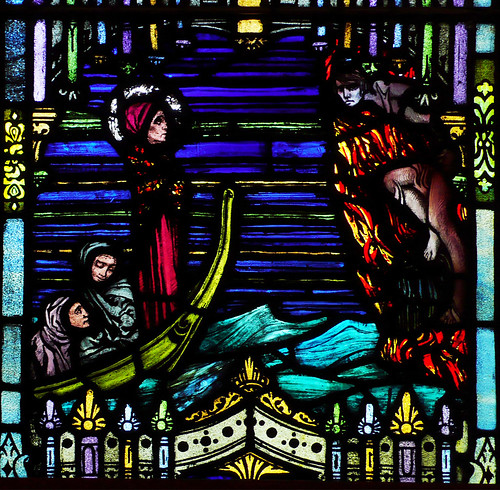
St Brendan, observing this, was moved to grief, and heaving many sighs, said within himself: ‘Woe is me, a poor sinner, who wear a monk’s habit, and who rule over many monks, when I here see a man of angelic condition, dwelling still in the flesh, yet unmolested by the vices of the flesh.’ On this, the man of God said: ‘Venerable father, what great and wonderful things has God shown to thee, which He has not revealed to our saintly predecessors! and yet, you say in your heart that you are not worthy to wear the habit of a monk; I say to you, that you are greater than any monk, for the monk is fed and clothed by the labour of his own hands, while God has fed and clothed you and all your brethren for seven years in His own mysterious ways; and I, wretch that I am, sit here upon this rock, without any covering, save the hair of my body.’ Then St Brendan asked him about his coming to this island, whence he came, and how long be had led this manner of life. The man of God replied: ., For forty years I lived in the monastery of St Patrick, and had the care of the cemetery. One day when the prior had pointed out to me the place for the burial of a deceased brothel’, there appeared before me an old man, whom I knew not, who said: ‘Do not, brother, make the grave there, for that is the burial-place of another.’ I said’ ‘Who are you, father?’ ‘Do you not know me?’ said he. ‘Am I not your abbot?’ ‘St Patrick is my abbot,’ I said. I am he,’ he said; and yesterday I departed this life and this is my burial-place.’ He then pointed out to me another place, saying: ‘Here you will inter our deceased brother; but tell no one what I have said to you. Go down on to-morrow to the shore, and there you will find a boat that will bear you to that place where you shall await the day of your death.’ Next morning, in obedience to the directions of the abbot, I went to the place appointed, and found what he had promised. I entered the boat, and rowed along for three days and nights, and then I allowed the boat to drift whither the wind drove it. On the seventh day, this rock appeared, upon which I at once landed, and I pushed off the boat with my foot, that it may return whence it had come, when it cut through the waves in a rapid course to the land it bad left.
‘On the day of my arrival here, about the hour of none, a certain animal, walking on its hind legs, brought to me in its fore paws a fish for my dinner, and a bundle of dry brushwood to make a fire, and having set these before me, went away as it came. I struck fire with a flint and steel, and cooked the fish for my meal; and thus, for thirty years, the same provider brought every third day the same quantity of food, one fish at a time, so that I felt no want of food or of drink either; for, thanks to God, every Sunday there flowed from the rock water enough to slake my thirst and to wash myself.
‘After those thirty years I discovered these two caves and this spring-well, on the waters of which I have lived for sixty years, without any other nourishment whatsoever. For ninety years, therefore, I have dwelt on. this island, subsisting for thirty years of these on fish, and for sixty years on the water of this spring. I had already lived fifty years in my own country, so that all the years of my life are now one hundred and forty; and for what may remain, I have to await here in the flesh the day of my judgment. Proceed now on your voyage, and carry with you water-skins full from this fountain, for you will want it during the forty days’ journey remaining before Easter Saturday. That festival of Easter, and all the Paschal. holidays. you will celebrate where you have celebrated them for the past six years, and after wards, with a blessing from your procurator, you shall proceed to that land you seek, the most. holy of all lands; and there you will abide for forty days, after which the Lord your God will guide you safely back to the land of your birth.’
XXVII
St Brendan and his brethren, having received the blessing of the man of God, and having given mutually, the kiss of peace in Christ, sailed away towards the south during Lent, and the boat drifted about to and fro, their sustenance all the time being the water brought from the island, with which they refreshed themselves every third day, and were glad, as they felt neither hunger nor thirst. On Holy Saturday they reached the island of their former procurator, who came to meet them at the landing-place, and lifted everyone of them out of the boat in his arms. As soon as the divine offices of the day were duly performed, he set before them a repast.
In the evening they again entered their boat with this man, and they soon discovered, in the usual place, the great whale, upon whose back they proceeded to sing the praises of the Lord all the night, and to say their Masses in the morning. When the Masses had concluded, Iasconius moved away, all of them being still on its back; and the brethren cried aloud to the Lord: ‘Hear us, O Lord, the God of our salvation.’. But St Brendan encouraged them: ‘Why are you alarmed? Fear not, for no evil shall befall us, as we have here only a helper on our journey.’
The great whale swam in a direct course towards the shore of the Paradise of Birds, where it landed them all unharmed, and on this island they sojourned until the Octave of Pentecost, When that solemn season had passed, their procurator, who was still with them, said to St Brendan: ‘Embark now in your boat, and fill all the water-skins from the fountain. I will be the companion and the conductor’ of your journey hence forth, for without my guidance you could not find the land you seek, the Land of Promise of the Saints.’ Then, while they were embarking, all the birds of the island, as soon as they saw St Brendan, sung together in concert: ‘May a happy voyage under his guidance bring you safely to the island of your procurator.’
XXVIII
They took with them provisions for forty days, as their course lay to the west [nb. Latin says ‘east’] for that space of time; during which the procurator went on before them, guiding their way. At the end of forty days, towards evening, a dense cloud overshadowed them, so dark that they could scarce see one another. Then the procurator said to St Brendan: ‘Do you know, father, what darkness is this?’ And the saint replied that he knew not. ‘This darkness,’ said he, ‘surrounds the island you have sought for seven years; you will soon see that it is the entrance to it ;’ and after an hour had elapsed a great light shone around them, and the boat stood by the shore.
When they had disembarked, they saw a land, extensive and thickly set with trees, laden with fruits, as in the autumn season. All the time they were traversing that land, during their stay in it, no night was there, but a light always shone, like the light of the sun in the meridian, and for the forty days they viewed the land in various directions, they could not find the limits thereof. One day, however, they carne to a large river flowing towards the middle of the land, which they could not by any means cross over. St Brendan then said to the brethren: ‘We cannot cross over this river, and we must therefore remain ignorant of the size of this country.’ While they were considering this matter, a young man of resplendent features, and very handsome aspect, came to them, and joyfully embracing and addressing each of them by his own name, said: ‘Peace be with you, brothers, and with all who practise the peace of Christ. Blessed are they who dwell in thy house, O Lord; they shall praise Thee for ever and ever.’
He then said to St Brendan: ‘This is the land you have sought after for so long a time; but you could not hitherto find it, because Christ our Lord wished, first to display to you His divers mysteries in this immense ocean. Return now to the land of your birth, bearing with you as much of those fruits and of those precious stones, as your boat can carry; for the days of your earthly pilgrimage must draw to a close, when you may rest in peace among your saintly brethren. After many years this land will be made manifest to those who come after you, when days of tribulation may come upon ‘the people of Christ. The great river you see here divides this land into two parts; and just as it appears now, teeming with ripe fruits, so does it ever remain, without any blight or shadow whatever, for light unfailing shines thereon.’ When St Brendan inquired whether this land ‘would. be revealed unto men, the young man replied: ‘When the Most High Creator will have brought all nations under subjection, then will this land be made known to all His elect.’ Soon after, St Brendan, having received the blessing of this man, prepared for his return to his own country. He gathered some of the fruits of the land, and various kinds of precious stones; and having taken a last farewell of the good procurator who had each year provided food for him arid his brethren, he embarked once more and sailed back through the darkness again.
When they had passed through this, they reached the ‘Island of Delights,’ where they remained for three days, as guests in the monastery; and then St Brendan, with the abbot’s parting blessing, set sail in a direct course, under God’s guidance, and arrived at his own monastery, where all his monks gave glory to God for the safe return of their holy patron, and learned from him the wonderful works of God, which he had seen or heard during his voyage.
[Selmer’s edition contains a Chapter XXIX, which is now considered a later interpolation. The version translated by O’Donoghue has only the following conclusion].
Afterwards he ended in peace the days of his life, on the nones of July, our Lord Jesus Christ reigning, whose kingdom and empire endure for ever and ever. Amen!